“Mr. Bianchi.”
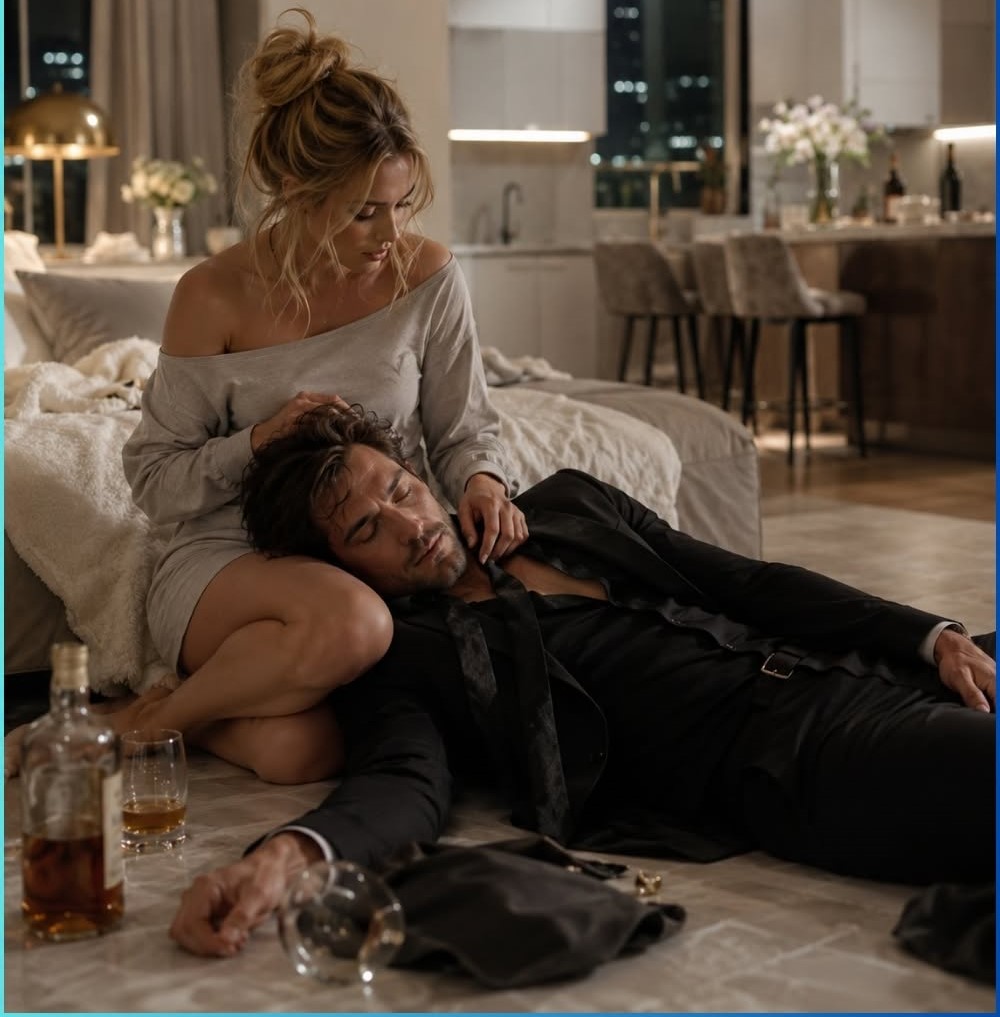
“Arthur,” Roman breathed. “She comes with us.”
Arthur Kane did not question him.
That somehow made everything worse.
We drove west as daylight spread across the city.
Roman’s bleeding worsened before we crossed the Golden Gate. I found a trauma kit beneath the front console and started an IV while Arthur drove as though every traffic law were optional.
“You are very calm,” Roman murmured.
“I am terrified.”
“You hide it well.”
“Panic does not clot blood.”
His eyes remained on my face as I held the fluid bag above him.
“You are useful.”
“I am not one of your possessions.”
“No,” he said before closing his eyes. “You are the woman holding my life in her hands.”
The safe house stood on a cliff north of the city, all dark glass, steel, and concrete overlooking the Pacific.
It had its own medical room.
Dr. Elias Mercer, a gray-haired physician who looked more suited to a suburban pediatric clinic than a criminal fortress, examined Roman’s wound.
“Who closed this?” he demanded.
“I did.”
He studied my bloodstained clothes.
“It is crude.”
“He was dying.”
Dr. Mercer looked at Roman’s pulse monitor.
“But he did not die.”
Arthur escorted me upstairs while the doctor prepared for surgery.
The guest suite was larger than my entire apartment. Floor-to-ceiling windows overlooked waves breaking against black rocks.
Arthur placed my bag inside.
“How long am I staying?”
“Until Mr. Bianchi decides otherwise.”
He closed the door.
The lock clicked from the outside.
I spent four hours pacing.
At noon, the door opened.
Roman entered alone.
He wore black sweatpants and a heavy white bandage around his torso. His face was pale, but his steps were steady.
“Mercer says you saved my spleen.”
“Wonderful. May I go home?”
“No.”
“You owe me your life.”
“That is why you are here.”
“You repay debts by kidnapping people?”
“The men who attacked me are searching for you.”
“You do not know that.”
Roman held out his phone.
The screen showed a photograph of my apartment building.
Two black sedans were parked outside.
Three men were questioning my landlord.
My knees weakened.
“They arrived forty minutes after we left,” Roman said.
“What did they do to him?”
“He refused to answer. They broke his hand.”
I covered my mouth.
Roman’s expression hardened.
“His hospital bills will be paid. His family will be protected.”
“That does not erase what happened.”
“No.”
His answer contained no excuse.
That surprised me more than a denial would have.
I looked toward the locked door.
“Am I a prisoner?”
“You are protected.”
“A locked room is still a cage.”
Roman studied me, then removed a key card from his pocket and placed it on the table.
“This opens every door except the armory and the security room.”
“Why?”
“Because you are right.”
I looked at him suspiciously.
“That was easy.”
“It was not.”
He walked to the door, then stopped.
“My enemies may have taken your old life from you, Nora. I will make sure they do not take anything else.”
“I do not belong to you.”
His hand tightened around the doorframe.
When he turned, the cold authority had returned to his face, but something raw moved beneath it.
“No,” he said. “But I am beginning to understand how badly I want you to choose me.”
Then he left the door unlocked.
Part 2
For three days, I lived inside Roman Bianchi’s fortress while his organization prepared for war.
No one forced me to remain in my room.
That almost made staying worse.
The front doors were unlocked. My key card worked. One of the SUVs could have taken me into town.
But Arthur showed me the surveillance photographs.
Men watched my apartment building, the Lantern Room, my former nursing school, and the cemetery where my mother was buried.
Leaving would not mean freedom.
It would mean becoming an easy target.
On the fourth morning, I found Roman in his office arguing with a man named Declan Royce.
Declan was younger than Arthur, with a broken nose, a tailored suit, and the impatient energy of someone who solved problems by hitting them.
“The Miller crew ordered the attack,” Declan said. “Give me twenty men and one night.”
“The Millers use guns,” Roman replied. “The man who attacked me used a knife.”
“So?”
“So it was personal.”
Roman sat behind a dark walnut desk. Color had returned to his face, but he moved carefully, one hand occasionally pressing against his bandaged side.
“Someone knew I dismissed my security detail before entering the Lantern Room,” he continued. “Someone knew which alley I used afterward. This came from inside.”
Declan noticed me standing at the open door.
His hand moved beneath his jacket.
“Who is she?”
“Nora,” Roman said. “Remove your hand from your weapon.”
Declan obeyed, though his expression remained hostile.
“The waitress?”
“The woman who kept me alive.”
Declan looked me over.
“She is a liability.”
Roman’s gaze turned glacial.
“Say that again.”
The room went silent.
Declan lowered his eyes.
“I meant no disrespect.”
“Yes, you did. Leave.”
After Declan departed, I entered the office.
“You do not need to threaten everyone who looks at me.”
“He was considering whether killing you would simplify the situation.”
“That is comforting.”
“I corrected his reasoning.”
I crossed my arms.
“You told me your enemies were hunting me because I helped you. That is not the whole truth.”
Roman leaned back.
“What else do you believe?”
“The man who stabbed you saw me.”
A muscle moved in his jaw.
“I looked through the peephole before I opened the door. There was another man running down the stairwell. He turned when you fell. I saw his face.”
Roman stood so quickly that pain flashed across his features.
“You did not tell me this.”
“You did not ask.”
“What did he look like?”
“Early forties. Shaved head. Scar from his left ear to his jaw. Gray eyes.”
Roman’s expression became perfectly still.
“Caleb Rusk.”
“You know him?”
“He is a former military contractor. He sells violence to people who prefer clean hands.”
“He saw me too.”
“Yes.”
“So no matter where I go, he will keep searching.”
Roman came around the desk.
“I will find him first.”
“You keep saying you will protect me, but your protection destroyed my home.”
“I did not order that attack.”
“No, but your life brought it to my door.”
The words landed harder than I intended.
Roman did not argue.
He walked to the window, looking out at the gray Pacific.
“My father taught me that fear was the only reliable form of loyalty,” he said. “He believed affection created leverage. If you cared for someone, an enemy could use them against you.”
“That sounds lonely.”
“It was efficient.”
“Was?”
Roman turned.
“Then you opened your door.”
For a moment, neither of us spoke.
I broke the silence.
“I want to return to nursing school.”
The confession surprised me. I had stopped saying it aloud years earlier.
Roman’s eyes narrowed thoughtfully.
“What prevented you?”
“Money. My father borrowed from people who collected interest with baseball bats. I paid because my younger brother was still living with him.”
“Where is your brother now?”
“Seattle. He has a wife and a baby. He thinks Dad’s debts disappeared.”
“Because you paid them.”
“Yes.”
Roman looked almost angry.
“At your father?”
“At you.”
“Why?”
“You gave away years of your life to protect people who do not know what it cost.”
“It was my choice.”
“And I took away what little you had left.”
I did not answer.
That evening, Arthur brought me a box recovered from my apartment.
Almost everything inside smelled of smoke.
There was my mother’s cracked picture frame, two nursing textbooks with burned edges, and the yellow blanket that had covered Roman.
Half of it was blackened.
I sat on the floor and cried for the first time.
Not graceful tears.
Ugly, breathless sobs that hurt my chest.
Roman found me there.
He did not speak. He lowered himself beside me, despite the wound in his side, and waited.
“They destroyed everything,” I whispered.
“I know.”
“My landlord may never use his hand properly again.”
“I know.”
“And you are going to kill everyone responsible.”
His silence answered.
I wiped my face.
“Will that rebuild my apartment?”
“No.”
“Will it fix his hand?”
“No.”
“Then stop pretending revenge is the same as repair.”
His dark eyes searched mine.
“What would you have me do?”
“Find the person who ordered it. Stop him from hurting anyone else. But do not burn half the city just to prove you are stronger.”
“In my world, restraint looks like weakness.”
“Maybe your world is the problem.”
Roman looked at the scorched blanket in my lap.
“My father would have killed you the first night.”
“You have mentioned that.”
“He would have called it practical.”
“And what do you call keeping me locked in a cliffside mansion?”
“Fear.”
The honesty disarmed me.
Roman’s voice lowered.
“I was afraid that if you walked outside, I would lose the first person who ever saved me without wanting something in return.”
I looked at him.
“You want something now.”
“Yes.”
“What?”
“You.”
The word settled between us.
Not shouted. Not demanded.
Confessed.
I rose slowly.
Roman stood as well.
He was close enough to touch, but he kept his hands at his sides.
“You cannot say you want me while your men guard every exit,” I said.
“I know.”
“You cannot turn gratitude into ownership.”
“I know.”
“And if you ever tell me I am yours, I will walk away, assassins or not.”
Something like amusement moved through his eyes.
“That sounds unwise.”
“I have never claimed to be wise.”
“No,” he said softly. “Only brave.”
He handed me a phone, a wallet, and a set of car keys.
“The vehicle in the east garage is registered to a holding company no one connects to me. There is cash in the wallet and an address for a protected apartment in Sacramento.”
I stared at the items.
“You are letting me leave?”
“I am giving you the choice I should have given you the first morning.”
“And Rusk?”
“Arthur can drive behind you without making contact.”
I looked toward the ocean.
Every instinct told me to run.
Yet when I imagined leaving, I did not feel relief.
I felt unfinished.
“I am staying until this is over,” I said.
Roman’s jaw tightened.
“Because you are afraid?”
“Because Caleb Rusk saw my face. I may be the only witness who can identify him.”
“That is not your responsibility.”
“It became my responsibility when I opened the door.”
Roman almost smiled at his own words being used against him.
Then his expression changed.
“I will not use you as bait.”
“I did not ask permission.”
The next morning, Roman taught me how to defend myself.
We started in the basement training room.
He showed me how to break a wrist hold, strike a throat, and create enough distance to run. I was terrible at all three.
When I tried to sweep his leg, he caught me around the waist.
My back met his chest.
His breath warmed my ear.
“Your balance is too high,” he murmured.
“My balance is fine when a six-foot-three criminal is not grabbing me.”
“You need practice.”
“You need boundaries.”
Roman immediately released me.
That mattered.
Later, Arthur taught me how to use a handgun. He emphasized safe handling, distance, and escape rather than heroics.
“A weapon does not make you powerful,” Arthur said. “It gives you one final option when every better option has failed.”
Roman watched from the doorway.
He hated every second.
That afternoon, Declan arrived with news.
They had found the leak.
Victor Sullivan, one of Roman’s senior lieutenants, had hired Rusk.
Sullivan controlled several waterfront warehouses and had quietly built a narcotics network Roman had forbidden.
“He thought you were getting soft,” Declan said. “Too much legitimate business. Too many rules about civilians.”
Roman’s expression did not change.
“Where is he?”
“Warehouse Seventeen.”
“Bring him alive.”
Declan blinked.
“Alive?”
“Nora is right. Dead men repair nothing.”
I looked at Roman.
He did not look back, but I knew he had heard everything I said.
The plan was to raid Sullivan’s warehouse before midnight.
I was supposed to remain at the safe house.
At nine seventeen, the power went out.
Emergency lights glowed red along the hallway.
Arthur’s voice came through my phone.
“Lock your door. Security breach.”
I reached for the handgun in the bedside safe.
A crash sounded downstairs.
Then three shots.
I left the room.
It was foolish, but Roman had gone to the warehouse with Declan. Arthur and two guards were the only people left in the house.
I found Arthur near the kitchen, bleeding from his shoulder.
“Rusk,” he grunted. “He used Sullivan’s access codes.”
“Where is he?”
“Security room. He is trying to erase the surveillance archive.”
I helped Arthur behind the concrete island and pressed a towel against his wound.
“Stay here.”
“That is an order I usually give.”
“Tonight is unusual.”
I moved through the dark corridor.
The security room door stood open.
A man in black tactical clothing faced the monitors.
Even from behind, I recognized the scar curling beneath his left ear.
Caleb Rusk.
My breathing stopped.
He turned.
Gray eyes settled on me.
“The waitress.”
I raised the gun.
Rusk smiled.
“You are holding it too tightly.”
He stepped forward.
I remembered Arthur’s instructions.
Distance. Exit. Survival.
I backed toward the hallway rather than allowing him to corner me.
“Roman is not here,” I said.
“I know.”
“Then why come?”
“To take what makes him careless.”
The answer froze my blood.
Rusk lunged.
I fired once into the floor between us.
The gunshot shook the corridor.
Rusk stopped.
I did not.
I ran through the kitchen and triggered the fire alarm. Steel shutters dropped over the windows. Sprinklers erupted from the ceiling.
Rusk followed, but the water slowed him on the polished floor.
Arthur rose behind the island and struck him with a heavy serving tray.
Rusk staggered.
I slammed the kitchen’s emergency partition switch.
A reinforced glass wall descended between us.
Rusk hit the barrier with both palms, trapped inside the pantry corridor.
Arthur looked at me through the falling water.
“You did not shoot him.”
“I found a better option.”
Roman returned twenty-three minutes later.
He crossed the flooded entrance with blood on his collar and fury in his eyes.
When he saw me alive, the fury broke.
He pulled me against him so hard my feet nearly left the floor.
“I told you to stay safe.”
“You were not here to tell me anything.”
His hands moved over my shoulders, checking for injuries.
“Did he touch you?”
“No.”
Roman looked through the glass at Rusk, who was now handcuffed to a steel support.
“Open the partition.”
I caught Roman’s arm.
“No.”
“He came here to take you.”
“And now he is alive. He can testify against Sullivan.”
“This is not a courtroom problem.”
“It can be.”
Roman stared at me.
Behind the rage, I saw the frightened man who had bled on my floor.
“If you kill him now,” I said, “you prove Sullivan was right. You prove violence is the only thing holding your empire together.”
Roman’s breathing slowed.
Arthur waited beside the controls.
Finally, Roman stepped back.
“Call Mercer for your shoulder,” he told Arthur. “Then contact our attorney.”
Rusk laughed from the corridor.
“You are finished, Bianchi. She made you weak.”
Roman turned toward him.
“No,” he said. “She made me choose what kind of man survives this.”
Part 3
Caleb Rusk gave up Victor Sullivan within twelve hours.
Not because he developed a conscience.
Because Roman’s attorney presented him with a choice between cooperating with federal investigators or carrying the full blame for attempted murder, arson, weapons violations, and the attack on my landlord.
Rusk chose survival.
Men like him usually did.
Sullivan disappeared before sunrise.
He emptied two accounts, abandoned his phone, and fled south in a delivery truck belonging to one of his companies.
Roman’s people found the truck outside San Jose.
Sullivan was gone.
For the first time since Roman had appeared at my door, there was no immediate danger. Rusk was in custody. The safe house security codes had been changed. Police officers who had secretly worked for Sullivan were being investigated.
I should have felt safe.
Instead, I felt the strange silence that follows a disaster.
My old apartment was uninhabitable. The Lantern Room had closed after federal agents searched the building. My job was gone.
Roman offered me a suite in one of his hotels.
I refused.
He offered a furnished condominium.
I refused that too.
Finally, he asked, “What will you accept?”
“An ordinary rental agreement.”
“You want to pay rent?”
“Yes.”
“That is absurd.”
“That is independence.”
Roman found me a small apartment in a legitimate building across from Golden Gate Park. The lease was in my name. The rent was fair. There were no guards inside, though Arthur admitted a security team watched the block.
I accepted that compromise until Sullivan was found.
On my first night there, Roman stood in the doorway carrying the scorched yellow blanket.
Helen had repaired it.
Blackened sections had been removed and replaced with squares of white and blue yarn.
“It looks different,” I said.
“It survived.”
Roman handed it to me.
“So did we.”
He did not enter until I stepped aside.
That was another thing that mattered.
We ate takeout Chinese food on the floor because I had no dining table. Roman had probably attended dinners where a single bottle of wine cost more than my yearly rent, yet he ate noodles from a paper carton without complaint.
“What happened at Warehouse Seventeen?” I asked.
“We seized Sullivan’s records.”
“We?”
“My attorney and an accountant.”
“That sounds disappointingly legal.”
“You are a corrupting influence.”
“What was in the records?”
“Payments to Rusk. Bribes. Narcotics shipments. Enough evidence to imprison Sullivan and several officials.”
“Will you turn it over?”
Roman stared into his food.
“If I do, the records also expose parts of my organization.”
“Parts involved in crimes?”
“Yes.”
I set down my carton.
“Then you already know the answer.”
“It would cost me millions.”
“Money can be earned again.”
“It may cost people their freedom.”
“If they harmed innocent people, freedom is not something you get to protect for them.”
Roman looked toward the window.
“My father built this organization. I spent my life believing I could control it without becoming him.”
“Did you?”
“For a while.”
“And now?”
“Now I do not know whether an empire built on fear can be repaired.”
“Maybe it should not be repaired.”
He gave a humorless laugh.
“You say that as if demolishing an empire is simple.”
“No. I say it as someone whose home was demolished by yours.”
The words hurt him.
I saw it.
But he did not turn away.
“What happens to us if I do this?” he asked.
“There is no us while I am part of a debt you believe you owe.”
“You are not a debt.”
“Then what am I?”
Roman’s voice became rough.
“The first future I have ever wanted.”
I looked down at my hands.
“I care about you.”
The admission frightened me more than Rusk’s gun.
“But I cannot love a man who protects me by controlling everyone around him. I cannot spend my life wondering which body paid for my safety.”
Roman remained silent for a long time.
Then he stood.
“I understand.”
He walked to the door.
“Roman.”
He stopped.
“You once said everyone is capable of murder under the correct circumstances.”
“Yes.”
“Maybe everyone is capable of change under the correct circumstances too.”
He looked at me over his shoulder.
“Is that what you think this is?”
“I think it is a choice.”
Three days later, Roman delivered Sullivan’s files to a federal prosecutor through his attorney.
The investigation that followed shook the waterfront.
Two city inspectors resigned. Four police officers were arrested. Sullivan’s narcotics network collapsed. Several of Roman’s own men were indicted.
Roman was not charged with Sullivan’s crimes, but federal investigators opened inquiries into his older businesses.
He responded by closing companies that existed only to launder cash and selling properties tied to illegal operations.
Declan called it surrender.
Arthur called it overdue.
Roman called it expensive.
I called it a beginning.
He established a legitimate security company for former service members and converted two waterfront warehouses into affordable commercial space. The Lantern Room reopened under new ownership, with health insurance for employees and a fund for workers returning to school.
My landlord received surgery, rehabilitation, and enough compensation to retire.
Roman did not put his own name on any of it.
“You could use the publicity,” I told him.
“Doing one decent thing does not erase twenty indecent ones.”
“No.”
“I am beginning to find that inconvenient.”
I smiled.
“Good.”
I reenrolled in nursing school for the fall semester.
Roman offered to pay.
I declined.
He offered a loan with no interest.
I declined that too.
Then an anonymous scholarship appeared through a foundation for students who had left school to support family members.
I confronted him at his office.
“You promised not to pay my tuition.”
“I did not pay your tuition.”
“The Bianchi Renewal Foundation did.”
“It has an independent board.”
“Whose chairperson is Arthur.”
“Arthur is highly independent.”
I tried not to laugh.
“You are impossible.”
Roman came around the desk.
He stopped two feet away.
In the past, he would have closed the distance without asking.
Now he waited.
“I can withdraw the scholarship,” he said.
“That would punish the other students.”
“Then perhaps you should accept that sometimes people help you because they want to.”
“That sounds familiar.”
His expression softened.
“I learned it from a waitress.”
Months passed without any sign of Sullivan.
Summer became fall.
I attended classes during the day and worked weekend shifts at a hospital reception desk. Roman visited when he could, always without an entourage inside the building.
He never called me his.
He never ordered me to stay.
Sometimes he slept on my couch because nightmares woke him when he was alone. Sometimes I changed the dressing on the scar beneath his ribs, though the wound had long since healed.
We kissed for the first time in my kitchen.
There was no blood, no gunfire, and no claim of ownership.
Roman touched my cheek and asked, “May I?”
I answered by pulling him toward me.
Being with him was not simple.
Some nights, he received calls he refused to explain. Some mornings, I wondered whether a man could truly escape the world that had formed him.
He never asked me to ignore those doubts.
“I cannot promise to become innocent,” he told me once.
“I am not asking for innocence.”
“What are you asking for?”
“Honesty. Choice. And no bodies buried because someone insulted me.”
“That last condition removes several enjoyable possibilities.”
“Roman.”
“I am joking.”
“You need practice.”
“So I have been told.”
In November, Sullivan finally surfaced.
He called me directly.
I was leaving an evening class when an unknown number appeared on my phone.
“Nora Hale,” a man said. “You have caused me a great deal of trouble.”
I stopped beneath a campus streetlight.
“Victor Sullivan.”
“You convinced Roman to destroy everything his father built.”
“Roman made his own choices.”
“He makes no choices where you are concerned.”
My hand shook, but my voice remained steady.
“What do you want?”
“Tell him to come to Pier Forty-Four. Alone. If he brings police or Arthur, people will die.”
“What people?”
“The night crew at the cold-storage facility beside the pier. Twelve workers. They have no idea they are standing above enough gasoline to light the bay.”
My blood turned cold.
“Let me speak to one of them.”
Sullivan laughed.
“You are learning.”
A terrified man came on the line and gave his name. In the background, I heard machinery and someone crying.
Sullivan returned.
“Midnight. Roman comes alone, or the building burns.”
The call ended.
I called Roman.
He arrived in nine minutes.
Arthur came with him.
We contacted the federal prosecutor handling Sullivan’s case and sent a tactical team toward the cold-storage facility.
Roman studied a map of Pier Forty-Four on my kitchen table.
“He expects the authorities to approach the workers,” he said. “The threat is a distraction.”
“Then where will he be?”
Roman looked at the abandoned shipping office near the end of the pier.
“The same place Rusk tried to kill me.”
“You are not going alone.”
“I have to make Sullivan believe I did.”
At eleven fifty, Roman entered the abandoned warehouse while I remained in a surveillance van three blocks away with Arthur and federal agents.
A microphone hidden beneath Roman’s collar transmitted every sound.
His footsteps echoed across the concrete floor.
Sullivan’s voice emerged from the darkness.
“You always were sentimental about old battlefields.”
“Release the workers.”
“They were released twenty minutes ago.”
The lead agent nodded.
His team had confirmed the employees were safe. The gasoline drums were empty.
Sullivan had lied to isolate Roman.
“You dismantled your own family for a bartender,” Sullivan said.
“I dismantled your operation because you burned a woman’s home and attacked civilians.”
“Your father would be ashamed.”
“My father is dead.”
“His empire does not have to be.”
A gun clicked over the microphone.
“Join me,” Sullivan said. “We rebuild. We remove the girl. In a year, no one remembers this weakness.”
Roman’s response came calmly.
“She has a name.”
A shot exploded through the speakers.
My heart stopped.
The transmission dissolved into static.
I reached for the van door.
Arthur caught my wrist.
“Wait.”
“You heard the shot.”
“Roman is wearing a vest.”
“That does not mean he is alive.”
The agents moved toward the warehouse.
Then Roman’s voice returned, strained but clear.
“Sullivan is moving toward the east exit.”
Arthur released me.
The operation unfolded in seconds.
Agents surrounded the pier. Sullivan emerged from the warehouse firing wildly and ran toward a waiting boat.
Roman followed, one hand pressed against his shoulder.
Sullivan reached the edge of the pier and turned his weapon toward Roman.
I saw everything through the van’s windshield.
I also saw the fuel truck approaching the intersection behind the federal vehicles.
The driver had no idea a gunfight was taking place ahead.
Sullivan fired.
Roman dropped behind a concrete barrier.
A stray bullet struck the truck’s windshield.
The vehicle swerved toward the agents.
I did not think.
I ran from the van, waving both arms.
“Stop!”
The driver braked.
The truck slid across the wet pavement, stopping yards from the barricade.
Sullivan used the confusion to reach the boat.
Roman rose with his gun aimed at Sullivan’s back.
For one suspended moment, the entire world seemed to wait.
Roman could kill him.
Sullivan had ordered the stabbing, the fire, the attack on my landlord, and the threat against innocent workers.
No jury would ever understand the full weight of what he had done.
Roman’s finger tightened on the trigger.
Then he lowered the weapon.
Federal agents tackled Sullivan before he could start the boat.
Roman chose not to become his father.
Only after Sullivan was handcuffed did Roman turn toward me.
Blood darkened his left shoulder where a bullet had passed through.
He looked furious.
“You left the van.”
“A truck was coming.”
“You could have been killed.”
“So could everyone else.”
Roman reached me and stopped.
Rain ran down his face.
For a second, I thought he might shout.
Instead, he laughed.
It was not the cold, dangerous sound I had heard in his office. It was exhausted and almost helpless.
“What am I supposed to do with you?” he asked.
“You could start by going to a hospital.”
“I mean for the rest of my life.”
The rain fell harder.
Agents moved around us. Sullivan shouted from the back of a federal vehicle. Sirens painted the warehouse walls red and blue.
Roman took my hands.
“The night I came to your door, I believed saving my life made you mine.”
I held his gaze.
“I remember.”
“I was wrong.”
“That may be the most romantic thing you have ever said.”
“I am not finished.”
He lowered himself onto one knee.
“You are bleeding,” I said.
“Yes.”
“In the rain.”
“Yes.”
“On a filthy pier.”
“Nora.”
I fell silent.
Roman removed a simple silver ring from his coat.
“I do not want to own you,” he said. “I want to deserve the moments you choose to give me. I want your anger, your impossible rules, your terrible coffee, and every argument I will probably lose.”
“Probably?”
“Certainly.”
Despite everything, tears filled my eyes.
“I cannot promise you a perfect man,” he continued. “I can only promise that when darkness offers me the easy choice, I will remember the woman who opened her door and chose to save a monster.”
I tightened my hands around his.
“Stand up.”
His face changed.
“That sounds like a rejection.”
“You have a bullet wound. I am not accepting a proposal while you are kneeling in contaminated rainwater.”
Arthur covered a smile behind us.
Roman stood.
I placed my hand against his cheek.
“My answer is yes,” I whispered. “But I am finishing nursing school before we plan anything.”
“Agreed.”
“And I keep my apartment.”
“We will discuss it.”
“That means I keep it.”
“Yes.”
“No private security following me into grocery stores.”
“Two agents outside.”
“One.”
“Two.”
“One, and Arthur can check the cameras.”
Roman sighed.
“You negotiate like a criminal.”
“I had an excellent teacher.”
He kissed me beneath the flashing lights while federal agents drove Victor Sullivan away.
A year later, I graduated from nursing school.
My brother came from Seattle with his wife and daughter. My landlord attended using a cane and complained loudly about the auditorium seats. Helen cried. Arthur claimed he had dust in his eye.
Roman sat in the front row.
He did not arrive as a king.
He did not bring armed men into the hall or demand special treatment.
He simply stood when my name was called and applauded harder than anyone else.
That evening, we returned to my apartment.
The repaired yellow blanket lay across the couch.
Roman poured two glasses of sparkling cider because I had an early hospital shift the next morning.
“You still make terrible coffee,” he said.
“You still drink it.”
“I have developed resilience.”
I leaned against him, listening to the quiet rhythm of his heart.
The scar beneath his shirt marked the place where a knife had nearly ended his life.
The ring on my hand marked the choice that came afterward.
Roman never became innocent.
Life did not work that way.
But his legitimate companies employed hundreds of people. The waterfront buildings that once hid Sullivan’s narcotics operation now housed small businesses, a community clinic, and a training center for emergency medical workers.
He spent the rest of his life repairing what he could.
And I never became his possession.
I became his equal, his conscience when he needed one, and the woman who reminded him that strength was not measured by how many people feared him.
Sometimes it was measured by the one person who did not.
At 2:14 every year on the anniversary of the night he knocked on my door, Roman would wake me, kiss my forehead, and whisper the same four words.
“I still need you.”
And every year, I gave him the same answer.
“Then keep choosing me.”
THE END