PART 3
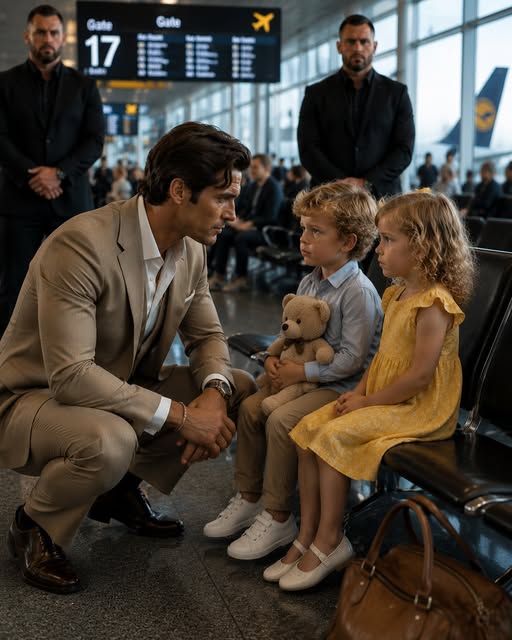
For a long moment, no one in the room moved.
The photograph lay on the table between us like something alive.
Anna Bennett stood on a windy beach with both twins in her arms. Lily and Owen were babies then, bundled in pale blue blankets, their small faces turned toward the camera. Anna’s smile was tired but unmistakably real. Her hair whipped across one cheek, and one hand curved protectively around Owen’s back.
Behind her, half-hidden near the edge of the frame, stood Claire.
Not the grieving widow.
Not the overwhelmed stepmother.
Not the woman who had claimed Anna was gone.
Claire was smiling.
The kind of smile people gave when they believed the moment belonged to them.
Elise touched the edge of the photograph with gloved fingers and turned it over again.
The date on the back stared up at us.
Eight months ago.
I heard Lily’s small breath catch.
“She’s alive?” she whispered.
No one answered fast enough.
Children notice silence before they understand words.
Owen pulled Captain against his chest so tightly the old bear folded in the middle. “Mommy?”
Dr. Patel looked at Maya, and Maya looked at me, as if everyone in the room understood the same terrible thing at once: hope can hurt a child as much as grief if adults handle it carelessly.
I lowered myself onto the carpet until I was at the twins’ level.
“I don’t know yet,” I said.
Lily blinked at me. “But that’s Mommy.”
“Yes.”
“And the picture says eight months ago.”
“Yes.”
“Claire said Mommy died when we were babies.”
Owen’s voice was barely there. “She said Mommy didn’t want us.”
The room seemed to shrink around that sentence.
I had heard adults lie for money, for power, for vanity, for survival. But some lies do not end when they leave the mouth. They keep living inside children, shaping the way they see themselves.
I wanted to tear those words out of them.
Instead, I held still.
“We don’t know the whole story yet,” I said. “But we know one thing for sure.”
Lily’s eyes searched mine.
“What Claire said may not be true.”
Owen looked down at Captain. His brow folded in confusion, then pain, then something smaller and more fragile.
“Then why didn’t Mommy come?”
That question had no safe answer.
Because perhaps Anna could not.
Because perhaps she would not.
Because perhaps everyone in this story had been moving inside a web Evan had discovered too late.
“I don’t know,” I said again. “And I won’t make up an answer.”
Lily nodded slowly, though tears gathered along her lower lashes.
“You don’t lie,” she whispered.
“No.”
Her small chin trembled. “I don’t like not knowing.”
“I don’t either.”
Owen looked at the photograph without reaching for it. “Can I touch it?”
Elise’s eyes softened. “We need to keep the original safe for now, buddy. But we can make a copy for you.”
“Why?”
“Because sometimes grown-ups need to show important things to other grown-ups in court.”
Owen stared at her, suspicious. “Will they give it back?”
“Yes,” Elise said. “And I’ll make sure you have a copy before we leave today.”
He studied her face with a seriousness no five-year-old should have needed.
“Do lawyers lie?” he asked.
Elise blinked once.
Maya pressed her lips together, trying not to react.
Elise crouched beside the table, her crisp suit folding awkwardly around her knees. “Some people lie, Owen. Lawyers are people, so some lawyers lie too. I don’t lie to children.”
He considered this.
Then he asked, “Do you eat pancakes?”
Elise looked startled. “Sometimes.”
“With blueberries on top or inside?”
“On top.”
Owen looked at me. “She might be okay.”
For the first time since the photograph appeared, Lily let out a tiny laugh through her tears.
That sound did something to the air.
It did not make the room less serious. It did not solve the mystery. But it reminded us that Lily and Owen were still children, not evidence, not victims in a file, not fragile glass ornaments that could only be watched from a distance.
They were children.
And children needed room to laugh even when the world had given them questions too heavy for their hands.
Maya carefully gathered the flash drive, the note, and the photograph. Everything was documented. Photographed. Sealed. Recorded. The adults spoke in low voices while Dr. Patel sat with the twins on the rug and asked them to draw what they were feeling.
Lily drew a house with three doors.
Owen drew Captain standing on a boat under a very large cloud.
I watched his hand move across the paper, dark crayon pressing too hard near the sky.
“Is the boat sinking?” I asked gently.
He shook his head. “Not yet.”
“Who’s driving it?”
“Captain.”
“Where is it going?”
Owen added a small shape on the horizon. “Somewhere with pancakes.”
Lily leaned over. “And a mommy?”
Owen froze.
His crayon stopped.
Then he drew a tiny figure beside the boat, so faint it was almost invisible.
“Maybe,” he said.
That one word followed me for the rest of the day.
Maybe.
It lived in the elevator as Elise and I rode down from the agency office. It sat between us in the car. It stood behind my shoulder when I stared out at Chicago’s gray afternoon and watched people cross streets with umbrellas blooming above them.
Maybe Anna was alive.
Maybe Evan had been afraid.
Maybe Claire had not simply abandoned the children out of selfishness.
Maybe there was a story underneath the story.
Elise waited until we were inside my office before speaking.
“We have to move carefully.”
I stood near the window. “That phrase is becoming irritating.”
“It’s also the only thing keeping this from turning into a legal disaster.”
“The children were told their mother was dead.”
“And now we have a photograph suggesting she was alive eight months ago. That does not tell us where she is, why she left, whether she was safe, whether she had legal custody issues, whether she contacted Evan, whether Claire was helping her or harming her—”
“Helping her?” I turned sharply.
Elise did not flinch. “I’m not defending Claire. I’m identifying possibilities.”
“She abandoned them.”
“Yes. And that is its own matter. But the photograph tells us Claire and Anna were in the same place. It does not tell us why.”
I hated that she was right.
I hated every unanswered question because each one left Lily and Owen suspended over hope.
Elise set the sealed evidence packet on my desk. The flash drive had not yet been opened. Not by us. Not without proper handling. Evan’s note made it clear he wanted me to see it, but my desire to know was not more important than preserving whatever truth might be inside.
“I’ll petition for review under appropriate supervision,” Elise said. “If there’s anything relevant to custody or safety, it needs to be admissible.”
“And if it’s not about custody?”
Her expression tightened. “Then it may be about Evan’s death.”
Neither of us spoke for a moment.
Rain tapped the windows.
Evan Bennett had known numbers told stories. He had hidden a message in his son’s stuffed bear. He had written my name as if I were the harbor he hoped his children might reach.
I had spent years believing I owed him nothing more than respect for an honest man.
Now his children looked at me like a promise.
“Elise,” I said, “find Anna.”
“We are.”
“No. Make it the priority.”
“It already is.”
“Then make it more than that.”
She studied me. “You’re angry.”
“Yes.”
“Good. Be angry in this room. Not in court. Not around the children. Not around Nathan. And especially not around Claire.”
“I don’t plan to see Claire.”
“That may not be up to you.”
The words proved true three days later.
The court scheduled an emergency review after Evan’s note and the photograph were entered into the case file. Claire’s attorney objected to nearly everything—authenticity, chain of custody, relevance—but even he could not soften the date on the back of the photograph or the effect it had on the room.
Claire sat beside him in a navy dress, pale and perfectly still.
She looked smaller without the beige coat.
For the first time, I noticed the shadows under her eyes. She did not look like a woman who had slept well. Her hands remained folded on the table in front of her, but her left thumb rubbed the side of her right hand again and again, the motion hidden unless someone knew how to watch for fear.
Nathan sat two rows behind Maya. His knees bounced until Lily reached over and placed her small hand on his leg.
He stopped immediately.
The twins did not attend the hearing itself, only the waiting room with Dr. Patel and their foster mother, Ms. Paula. That was one blessing.
The judge reviewed the new information without theatrics. She was a woman in her sixties with silver hair and a voice that made interruption feel impossible.
“Mrs. Bennett,” she said, “your prior statements indicated the children’s biological mother was deceased.”
Claire’s attorney began to rise.
The judge looked at him. “I am not inviting argument yet.”
He sat.
Claire swallowed.
“Yes, Your Honor.”
“Do you maintain that statement?”
Claire did not answer.
Her attorney leaned toward her, whispering.
Claire stared at the table.
“Mrs. Bennett,” the judge said, “do you maintain that Anna Bennett is deceased?”
Claire closed her eyes.
“No,” she whispered.
The room changed.
Nathan inhaled sharply.
Maya’s pen stopped moving.
Elise’s posture went still beside me.
The judge’s face remained unreadable. “Speak clearly.”
Claire opened her eyes. They were wet now.
“No, Your Honor. I don’t know if Anna is dead.”
Nathan whispered, “What?”
The judge looked toward him, and he went silent.
Claire’s attorney looked as though he had been handed a different case from the one he had prepared.
“You told two children their mother was dead,” the judge said.
Claire’s lips parted, but no words came.
“Why?”
Her answer came so softly that at first I thought I had misheard it.
“Because Evan told me to.”
I felt Elise shift beside me.
Nathan stood halfway before catching himself. “That’s not true.”
The judge’s gaze snapped to him.
He sat, shaking.
Claire turned slightly, not toward Nathan, not toward the judge, but toward me. Her eyes found mine across the courtroom.
For one moment, the woman from the airport disappeared. In her place was someone cornered by a truth she had buried badly.
“Evan said she was dangerous,” Claire whispered. “He said the children couldn’t know. He said if Anna came back, we had to protect them.”
Elise’s hand closed over her pen.
The judge leaned forward slightly. “And yet Mr. Bennett’s note states the children were not safe with anyone who benefits from his silence.”
Claire flinched.
“I don’t know what that means,” she said.
But she did.
I saw it.
So did Elise.
So, I suspected, did the judge.
The hearing did not end with answers.
It ended with new restrictions.
Claire’s contact with the children remained suspended pending further investigation. Nathan’s home study was expedited. The flash drive was ordered to be reviewed by forensic specialists under court-approved handling. Anna Bennett’s status became an urgent matter.
Outside the courtroom, Nathan paced near the windows with his hands on his hips.
“She lied,” he said. “She lied to their faces.”
Maya stood nearby. “Nathan.”
He turned, grief blazing through him. “They thought their mother was dead.”
“I know.”
“How do I tell them? How does anyone tell them?”
Dr. Patel joined us from the family waiting area. “Slowly. Honestly. With support.”
Nathan pressed his fist gently against the wall, not hard enough to make a sound. Just enough to hold himself upright.
“I missed everything,” he whispered. “Evan needed me, and I was busy being proud.”
I looked at him then, really looked.
He was not polished. He was not powerful. He did not enter rooms and make people calculate. But his regret was not theatrical. It had weight. It was doing work inside him.
“You’re here now,” I said.
He looked at me with red-rimmed eyes. “Is that enough?”
“No.”
He almost laughed, bitterly.
“But it’s where enough begins,” I added.
He looked away.
Maya nodded once, as if that was the first useful thing I had said all day.
The twins learned only part of the truth that afternoon.
Not in the courthouse hallway.
Not from panicked adults.
Not from whispers.
They learned it in Dr. Patel’s office, where the chairs were soft and the shelves held wooden puzzles, puppets, and smooth stones in a bowl. Sunlight came through gauzy curtains, painting the carpet in warm rectangles.
Lily sat between me and Nathan on the couch.
Owen sat on the floor with Captain in his lap, knees tucked under his chin.
Maya sat near the door. Ms. Paula waited outside.
Dr. Patel began with the photograph.
A copy, not the original.
She placed it on the low table.
Lily stared at it.
Owen leaned forward.
“This picture shows your mom,” Dr. Patel said gently. “And it looks like it was taken more recently than people first thought.”
Lily’s fingers curled into the hem of her sweater. “So she didn’t die when we were babies.”
“We don’t have all the answers yet,” Dr. Patel said. “But we do know that what you were told before may not be true.”
Owen whispered, “Maybe she wanted us?”
Dr. Patel did not rush.
“She might have,” she said. “We are trying to learn more.”
Lily looked at Nathan. “Did you know?”
Nathan shook his head. “No, sweetheart. I didn’t.”
She looked at me. “Did you?”
“No.”
“Did Daddy know?”
The adults went very quiet.
Dr. Patel answered carefully. “We think your daddy knew more than we do right now. And we are trying to understand what he was protecting you from.”
Owen’s face crumpled. “Why do grown-ups protect kids by not telling them anything?”
The question broke something open in Nathan.
He slid from the couch to the floor, sitting a few feet from Owen.
“Sometimes grown-ups get scared,” he said. “Sometimes we think hiding things will keep kids safe. Sometimes we’re wrong.”
Owen watched him.
Nathan’s voice shook. “I was wrong too. I stayed away from your dad because I was hurt. I thought there would be more time.”
Lily slipped off the couch and sat beside him.
“Are you going away again?” she asked.
Nathan closed his eyes briefly.
“No,” he said. “Not unless a judge says I have to wait outside a room. Not unless you tell me you need space. But I am not choosing to go away again.”
Lily leaned into him.
It was not a full hug.
Not yet.
But Nathan’s hand hovered uncertainly before resting gently on her shoulder, and his face changed as if someone had handed him something breakable and precious.
Owen looked at me.
“You too?”
My throat tightened.
“I’m here,” I said.
“That’s not the same answer.”
Smart boy.
“No,” I admitted. “Because your uncle is family, and the grown-ups are working on whether you can live with him. My role is different.”
His eyes narrowed. “What role?”
I looked at Dr. Patel.
She gave a small nod that said, Be honest.
“I was your father’s friend once,” I said. “Not a close friend. But he trusted me with something important. Now I want to help keep that promise.”
“So you’re promise family?” Owen asked.
The words hit me so hard I could not answer for a second.
Nathan looked at me, and something passed between us.
Not rivalry.
Not ownership.
Something quieter.
Permission, maybe.
“If that’s okay with you,” I said.
Owen considered it.
Then he lifted Captain and made the bear nod.
“Captain says okay.”
Lily wiped her eyes with her sleeve. “Captain is very wise.”
“He’s a captain,” Owen said, as if this explained everything.
And for the first time since the airport, the children had a new word for what was forming around them.
Not perfect.
Not simple.
Not yet permanent.
But real.
Promise family.
Over the next month, Nathan’s home became the center of everyone’s attention.
He lived in a modest white house with blue shutters on a quiet street where the sidewalks cracked around old tree roots. There was a maple tree in the front yard, a porch swing that needed repainting, and a garage that smelled faintly of motor oil and sawdust.
Maya visited twice.
Then again.
A licensing worker inspected cabinets, smoke detectors, bedroom windows, cleaning supplies, and the hot water temperature. Nathan answered questions with nervous honesty. He had no experience parenting. He worked long hours but had already spoken to his employer about a modified schedule. He had one speeding ticket from four years ago. He burned toast often. He knew how to fix almost anything mechanical but admitted he had no idea how to braid hair.
Lily overheard that last part during a supervised home visit.
“I can teach you,” she said.
Nathan looked down at her. “You can?”
She nodded seriously. “But you have to listen.”
“I can listen.”
Owen, from the floor, pushed his wooden truck under a chair. “He also has to learn pancakes.”
“I make pancakes,” Nathan said.
“With blueberries on top?” Owen asked.
Nathan hesitated.
Owen sighed. “We have a lot of work.”
The house visits became small chapters of discovery.
Lily found a box of Evan’s old things in Nathan’s closet—baseball cards, school photos, a science fair ribbon, a postcard from a camping trip. She held each object like a clue.
“Daddy had glasses?” she asked, staring at a photo of twelve-year-old Evan smiling awkwardly with oversized frames.
Nathan smiled. “For one year. He hated them.”
“Why?”
“Said they made him look like a worried owl.”
Lily giggled. “He did look like a worried owl.”
Owen found a dent in the garage wall and demanded its history.
Nathan scratched his jaw. “Your dad threw a tennis ball in here after I told him not to.”
“Daddy was bad?” Owen asked, thrilled.
“He was human,” Nathan said. “And I was mad for about six minutes. Then he fixed it badly, and I was mad again.”
“Where is the bad fixing?”
Nathan pointed to a patch of uneven paint.
Owen touched it with awe. “Daddy made that?”
“Yep.”
Owen looked at the wall like it was a museum exhibit.
The children were not simply meeting Nathan.
They were meeting their father through him.
That mattered.
I saw it, and though it hurt, it also steadied me.
My visits continued too, though they changed. Sometimes I met them at the agency. Sometimes Dr. Patel included me in therapy sessions when the children asked. Once, with permission from everyone, we met at a park.
It was the first time I saw Lily run.
Really run.
Not hurry because someone told her to.
Not move quickly to avoid being scolded.
Run.
Her curls bounced behind her as she chased Owen across the grass, both of them shrieking with laughter while Nathan pretended to be too slow to catch them.
Marco stood beside me near a bench, holding a paper bag of sandwiches.
“You’re smiling,” he said.
“No, I’m not.”
“You are.”
“Don’t make it strange.”
“It’s already strange.”
I glanced at him.
He nodded toward the children. “Good strange.”
Owen tripped and fell, palms first into the grass.
Everyone froze for half a beat.
Then Nathan walked over calmly. “You okay, buddy?”
Owen looked at his hands.
No blood.
No tears.
He looked at Nathan. Then at me.
“I fell.”
“I saw,” Nathan said.
“Am I in trouble?”
Nathan sat down in the grass beside him. “For falling?”
Owen shrugged.
“No,” Nathan said. “Grass gets lonely. Sometimes people visit.”
Owen stared.
Then he laughed.
Lily dropped beside him dramatically. “I’m visiting too!”
Nathan fell back on the grass with an exaggerated groan.
Soon both children were laughing on top of him, and Marco looked away quickly.
I pretended not to notice his eyes had gone wet.
That afternoon, Owen handed me a dandelion.
It was half crushed.
“For your office,” he said.
“My office may not deserve something this nice.”
“Then put it somewhere else.”
“Good advice.”
Lily ran up with three more. “You need a family of flowers.”
I took them carefully.
That night, I placed all four dandelions in a glass of water on my kitchen island.
They looked absurd there beneath the modern pendant lights, surrounded by marble, steel, and silence.
They also looked like the first honest decoration the place had ever had.
The flash drive report came in on a rainy Tuesday.
Elise called me to her office instead of coming to mine.
That alone told me enough.
Her conference room had glass walls and a view of the river. The sky beyond was low and pewter-colored, and the water below moved in restless dark folds.
A forensic analyst sat beside her with a laptop closed in front of him.
Maya was present by video. So was a representative from the court-appointed team. Everything was formal, documented, careful.
I sat.
Elise began without preamble.
“The drive contains financial records, scanned documents, audio files, and a video message from Evan.”
My hands curled once against the armrests.
“A video?”
“Yes.”
“Have you watched it?”
“Only with the forensic team.”
“What’s on it?”
She exchanged a look with the analyst.
“Elise.”
“The financial records suggest Evan was investigating a trust created before the twins were born. The trust involved Anna Vale Bennett, Claire’s family, and an offshore structure connected to the same network Evan warned you about years ago.”
I sat back slowly.
“Claire’s family?”
“Her maiden name is Whitcomb.”
That name I knew.
Old money. Quiet money. The kind that moved through foundations, boards, private schools, and charity galas without ever appearing too hungry. The Whitcombs were not loud enough to be infamous. They were too careful for that.
“What did they want with Evan?”
“It may not have started with Evan,” Elise said. “It may have started with Anna.”
The analyst opened the laptop and turned it toward me.
“We can show the beginning of the video,” he said. “The full file is being reviewed for admissibility and relevance, but Mr. Bennett addressed portions directly to you.”
The screen went black for a second.
Then Evan appeared.
Alive.
He sat in what looked like a basement or storage room. His hair was disheveled, his face thinner than I remembered, his blue eyes ringed with exhaustion. Somewhere nearby, a furnace hummed.
He looked into the camera and tried to smile.
“Ryker,” he said.
The sound of his voice reached across years and struck me harder than I expected.
“If you’re watching this, I’m either dead, missing, or out of options. I hope it’s the third one, but I’ve worked with numbers too long to ignore probability.”
He glanced off-camera, then back.
“I’m sorry to put this on you. You didn’t ask for my problems. But years ago, I brought you a set of accounts because I believed you deserved to know your name was being used without your knowledge. You acted when you could have buried it. That matters now.”
He swallowed.
“My children are Lily and Owen. They’re five. They like pancakes, rabbits, and a ridiculous bear named Captain who has done more emotional labor than most adults I know.”
Despite the heaviness in the room, my mouth trembled.
Evan’s expression changed.
“If anything happens to me, people will tell a clean story. They’ll say grief made me unstable. They’ll say Anna abandoned us. They’ll say Claire held everything together. Parts of that will sound true because the best lies borrow from real pain.”
He leaned closer.
“Anna did leave. But not because she didn’t love the twins.”
The room seemed to stop breathing.
“She was afraid. I didn’t understand it then. I was angry. Hurt. Proud. I believed what I was shown because it was easier than believing my wife had been cornered by something bigger than us.”
Evan rubbed both hands over his face.
“When Anna came back, she told me Claire wasn’t who I thought she was. I didn’t believe her at first. Claire had been kind to the children. Kind to me. She entered our life when everything was broken, and broken people trust anyone who knows where to place the bandage.”
His voice cracked.
“I married Claire because I thought I was building a home again. But Anna had proof that Claire’s family had been watching us since before the twins were born. Watching Anna. Watching money that was supposed to disappear. Money Anna’s father hid before he died.”
Elise paused the video.
I stared at the frozen image of Evan’s face.
“Anna’s father,” I said.
“Gabriel Vale,” Elise replied. “Former compliance officer for a private banking group. Died six years ago.”
“Connected to the accounts?”
“Yes.”
The analyst added, “The documents suggest Vale discovered a laundering network, copied records, and created a trust as a safeguard. Anna may have inherited access without knowing what it truly contained.”
I looked at the screen again. “And Claire?”
“Possibly placed near Evan to monitor Anna’s return or locate what Gabriel Vale hid.”
“Placed,” I repeated.
Elise’s mouth tightened. “We do not yet know how much Claire personally chose and how much involved family pressure.”
I thought of Claire’s fear at the airport.
Not fear of police.
Fear of Captain.
“Play it,” I said.
The video continued.
“I don’t know exactly what Claire knows,” Evan said. “Some days I think she’s trapped. Some days I think she’s lying. Maybe both. But she knows enough to be dangerous and scared enough to be unpredictable.”
He looked down, and when he looked up again, his eyes were wet.
“If I’m gone, don’t let anyone turn my children into leverage. Don’t let them be separated if it can be helped. Don’t let them believe Anna left because they were unlovable.”
His voice lowered.
“And Ryker… there is something else.”
The video flickered.
The image distorted.
Then it cut to black.
The analyst frowned. “The file is corrupted at this section. We’re working on recovery.”
“How much is missing?” I asked.
“Unknown. There are fragments.”
“Recover them.”
“We are.”
Elise gave me a warning look, but this time she did not correct my tone.
Maya’s voice came through the speaker. “The children cannot hear this yet. Not like this.”
“No,” I said. “They hear only what Dr. Patel says is appropriate.”
“Elise,” Maya said, “does this change placement considerations?”
“It may increase the need for security and discretion,” Elise replied. “But emotionally, Nathan remains the most viable family placement if approved.”
Maya nodded. “Then we keep moving.”
Keep moving.
That was all any of us could do.
The children’s transition to Nathan’s care happened gradually.
Day visits became longer.
Then an overnight.
Lily packed carefully: pajamas, two books, her toothbrush, a sweater, and a small framed copy of the photograph of Anna with the twins as babies. Owen packed Captain, the wooden truck, three socks, no pajamas, and seventeen small rocks he claimed were important.
Ms. Paula found the pajamas.
Nathan made spaghetti for dinner.
Too much spaghetti.
Enough spaghetti for six adults and possibly a marching band.
Lily twirled noodles on her fork with intense concentration. “You made a lot.”
Nathan glanced at the pot. “I panicked.”
Owen nodded. “It happens.”
“Does it?”
“Yes. Ryker forgot pancakes.”
“I didn’t forget them,” I said from the video call Nathan had placed on the kitchen counter. “I had not prioritized them.”
Lily giggled. “That means forgot.”
Nathan pointed a wooden spoon at the phone. “You’re being outvoted.”
“I see that.”
The overnight was not perfect.
Owen woke at two in the morning and cried because he could not remember where the bathroom was. Lily tried to help, became frightened herself, and Nathan found both of them in the hallway holding hands in the dark.
He did not turn on the bright overhead light.
He switched on a small lamp.
“Hey,” he said softly, crouching. “New houses are confusing at night.”
Owen wiped his face. “I forgot.”
“That’s okay. I forget where I put my keys every day.”
Lily sniffed. “Keys don’t get scared.”
“You haven’t met my keys.”
She stared at him.
Then she gave the tiniest smile.
Nathan walked them to the bathroom, then to the kitchen for water, then back to bed. He sat on the floor between their two small beds until they slept again.
In the morning, he called me.
“They stayed,” he said, voice rough with wonder.
I stood in my kitchen, looking at the dandelions long since wilted but still in their glass.
“They did.”
“I was afraid I’d do it wrong.”
“You will.”
“Helpful.”
“You’ll do it wrong and repair it. That seems to be the job.”
Nathan was quiet.
Then he said, “They asked if you can come for breakfast next time.”
My chest tightened.
“With blueberries on top?”
“Obviously.”
The next time came on a Saturday morning in early spring.
Nathan’s maple tree had begun to bud. The air smelled damp and new, and Lily opened the front door before I knocked.
“You’re late,” she said.
I checked my watch. “I’m three minutes early.”
She considered this. “Then Uncle Nathan is late with pancakes.”
From the kitchen, Nathan called, “I heard that.”
Owen appeared behind Lily wearing a shirt backward and one sock. “Captain says come in.”
I stepped inside.
Nathan’s house was not quiet now.
There were crayons on the table, tiny shoes by the door, a drawing taped crookedly to the refrigerator, and a list in Lily’s careful handwriting that read:
HOUSE RULES
1. No lying.
2. Captain can sit at breakfast.
3. If someone spills, get napkins.
4. Nobody leaves without saying goodbye.
5. Pancakes on Saturdays maybe.
I stared at number four longer than the others.
Nathan noticed.
“She wrote it,” he said quietly.
Lily heard him. “It’s a good rule.”
“It’s the best rule in the house,” I said.
She smiled.
We ate pancakes with blueberries on top.
Nathan burned the first batch and tried to hide them under a towel. Owen discovered them and declared they looked like “sad moons.” Lily insisted they should still be respected, so Nathan placed them on a separate plate and called it a memorial.
For one ordinary morning, the mystery waited outside.
Lily asked about my office.
Owen asked if Marco was born wearing a suit.
Nathan tried to braid Lily’s hair and created something that looked less like a braid and more like a rope after a storm.
Lily patted it gently. “You’re improving.”
Nathan bowed his head. “Your generosity humbles me.”
After breakfast, Owen brought Captain to me.
“He wants to see your car.”
“Does he?”
“He likes engines.”
Nathan laughed. “That bear has expanded interests.”
Outside, Owen climbed carefully into the back seat of my car with permission, Captain beside him. He asked questions about every button. Lily sat in the front passenger seat with the door open, pretending to be very grown-up while Nathan stood nearby with coffee.
For the first time in months, I let myself imagine a future not built on crisis.
Nathan raising them.
Me visiting.
Elise pretending not to care while sending birthday gifts too expensive for children.
Marco teaching Owen how to stand with his arms crossed and look unimpressed.
Lily learning she did not have to earn love by being useful.
It was not the life I had expected.
It was better.
Then my phone rang.
Elise.
I stepped a few feet away.
“Yes?”
Her voice was controlled, but something underneath it had shifted. “We recovered part of the corrupted video.”
I looked back at the children.
Lily was laughing because Owen had accidentally turned on the seat warmer and accused the car of hugging him.
“What did it say?”
“Not over the phone.”
“Elise.”
“Ryker, not over the phone.”
My hand tightened around the device.
“Is it about Anna?”
“Yes.”
“Is she alive?”
A pause.
“I don’t know.”
That was not the answer I expected.
“What does that mean?”
“It means Evan believed she was alive when he recorded the video. But he also believed someone else was using her identity.”
I turned away from the house.
The maple branches moved lightly in the wind.
“What?”
“There are travel records, medical forms, signed releases. Some appear genuine. Some don’t. The recovered fragment shows Evan saying Anna may not be the only person involved.”
“Who else?”
Elise exhaled. “There’s a name we need to verify.”
“Tell me.”
Another pause.
Then she said, “Marisol Vale.”
I searched my memory. Nothing.
“Anna’s sister?”
“That’s the problem,” Elise said. “Officially, Anna Vale was an only child.”
Before I could respond, Lily called from the car.
“Ryker! Captain found a secret button!”
I turned.
She was holding up the bear, laughing, but my body went still.
Captain’s green ribbon had slipped loose in her hand.
Underneath it, pressed into the fabric near the seam we had already opened, was something we had missed.
A second zipper.
Smaller.
Hidden deeper.
Almost invisible unless the ribbon fell exactly the right way.
Owen leaned forward, eyes wide.
“I didn’t know Captain had another pocket,” he whispered.
Nathan stepped closer, all color draining from his face.
Elise was still speaking in my ear.
“Ryker? What happened?”
I looked at the children, at Nathan, at the bear Evan had trusted with more than one secret.
Then Lily opened the second pocket.
Inside was a tiny folded note.
Not in Evan’s handwriting.
In a woman’s.
Lily unfolded it before anyone could stop her, and her face changed as she read the first line aloud.
“My sweet Lily and Owen… if you find this, please know Mommy never left you by choice.”
👉 Follow the page and turn on notifications so you won’t miss the next chapter. The story continues in the next post.