United States Navy Warship Destroyed in Massive Missile Strike During High Stakes Mission
United States Navy Warship Destroyed in Massive Missile Strike During High-Stakes Mission
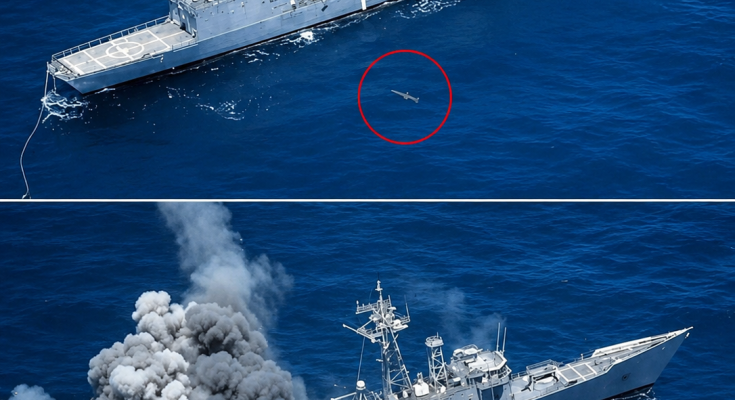
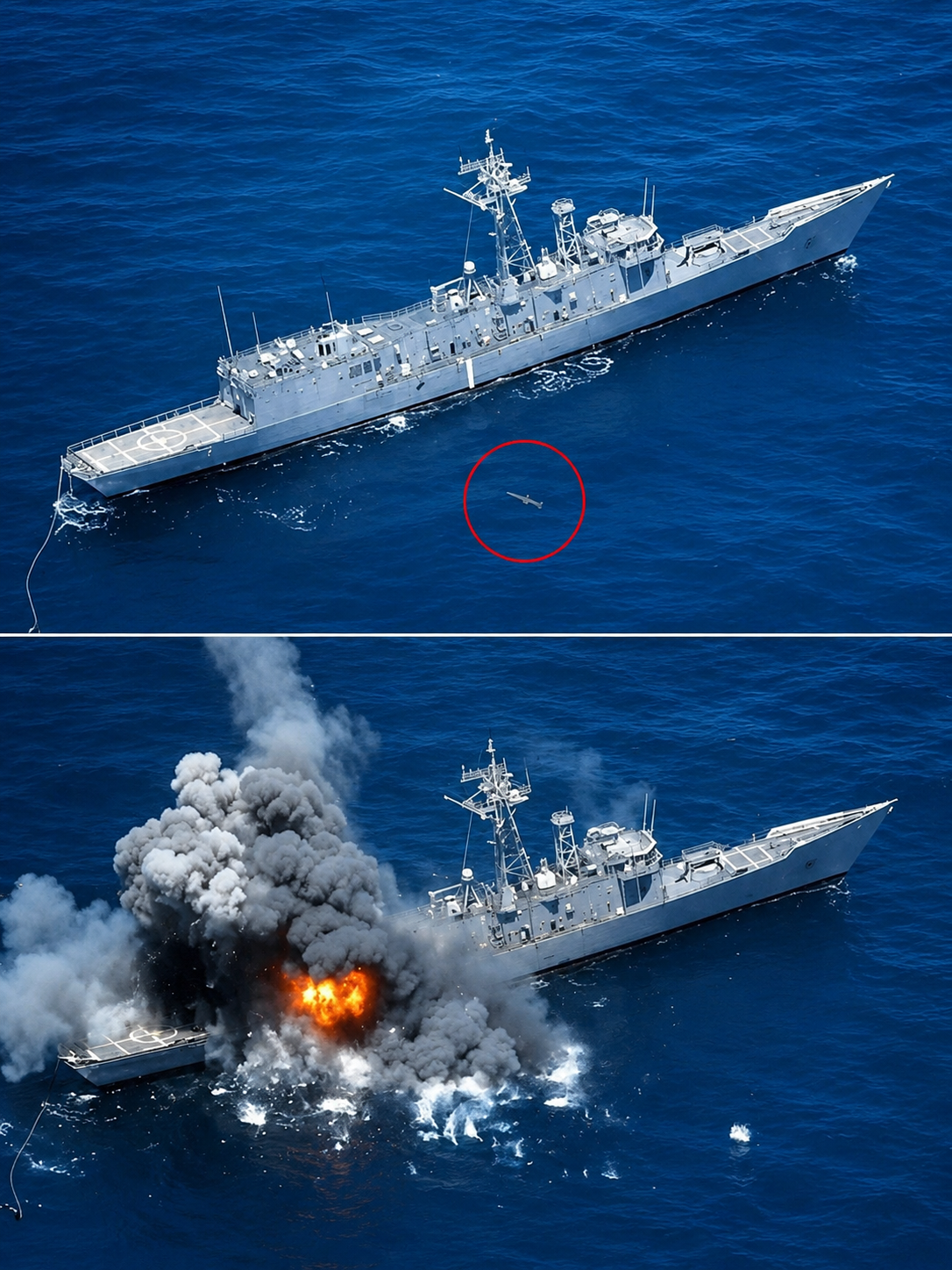
The deep blue waters of the Pacific recently became the final resting place for a legendary piece of American naval history. In a dramatic and carefully orchestrated military exercise, the former USS Rodney M. Davis (FFG-60) was struck by anti-ship missiles and ultimately sank beneath the waves, marking the end of more than four decades of service. Although images of the ship engulfed in smoke and flames quickly spread across social media, officials emphasized that this was not a combat loss but a planned live-fire training exercise designed to strengthen the readiness of allied naval forces.
The sinking took place during one of the world’s largest multinational maritime exercises, where naval forces from numerous partner nations gathered to test weapons, tactics, and coordinated operations in realistic combat scenarios. Military planners selected the decommissioned frigate as a target because its size, structure, and design closely resembled the kinds of surface combatants that modern navies may encounter during future conflicts. By striking an actual warship rather than a simulated target, participating forces gained valuable data that cannot be replicated through computer simulations alone.
Commissioned into the United States Navy in 1982, USS Rodney M. Davis represented one of the most successful classes of warships produced during the Cold War. As an Oliver Hazard Perry-class guided-missile frigate, the vessel was designed to protect aircraft carriers, amphibious assault ships, and supply convoys from enemy submarines, aircraft, and surface vessels. At a time when tensions between the United States and the Soviet Union dominated global security, these frigates became an essential component of American naval strategy.
The ship carried a name that reflected extraordinary courage. It honored Marine Corps Sergeant Rodney Maxwell Davis, who received the Medal of Honor after sacrificing his own life during the Vietnam War to save fellow Marines. His selfless actions became a lasting symbol of bravery, making the vessel far more than simply another warship in the fleet. Throughout its operational life, the frigate proudly carried that legacy across thousands of miles of ocean.
Over the years, USS Rodney M. Davis participated in countless deployments throughout the Pacific Ocean, Indian Ocean, and Persian Gulf. It escorted commercial shipping through dangerous waters, supported international maritime security operations, conducted anti-piracy patrols, and worked alongside allied navies during joint exercises. The ship also responded to humanitarian missions following natural disasters, demonstrating that naval power is not solely measured by weapons but also by the ability to deliver aid and stability when communities face crises.
The Oliver Hazard Perry-class itself became one of the most recognizable warship designs of its era. Measuring approximately 453 feet in length and displacing more than 4,000 tons, these frigates combined speed, endurance, and versatility. They carried guided missiles, naval guns, anti-submarine torpedoes, close-in defense systems, and helicopters capable of hunting submarines far beyond the horizon. Although technological advances eventually rendered the class less suitable for front-line combat against modern missile threats, the ships remained respected platforms for decades.
After retiring from active service, the former Rodney M. Davis entered a new phase of usefulness. Instead of being dismantled immediately, the vessel was preserved for future military testing. Before the live-fire exercise, specialists carefully removed hazardous materials, fuels, lubricants, and environmentally sensitive components to ensure the sinking complied with environmental regulations. Engineers also stripped classified military equipment, electronics, and weapons systems before preparing the ship as a realistic target.
During the exercise, surveillance aircraft, satellites, drones, and naval vessels continuously monitored every stage of the operation. The target ship was positioned in a designated area of open ocean, far from commercial shipping lanes and populated coastlines. Once all safety checks had been completed, participating forces initiated the carefully planned strike sequence.
Observers watched as precision-guided anti-ship weapons slammed into the aging frigate. Initial impacts produced towering columns of smoke and fire as explosions ripped through sections of the hull. Secondary detonations followed as internal compartments suffered catastrophic structural damage. Despite the intense punishment, the ship remained afloat for a period, demonstrating the remarkable durability built into Cold War-era naval engineering.
As flooding spread through multiple compartments, the vessel gradually lost stability. Water poured through ruptured bulkheads while smoke billowed hundreds of feet into the sky. Eventually, the stern settled deeper into the ocean before the bow followed. Within minutes, the once-proud frigate slipped beneath the surface, disappearing into the Pacific and concluding a naval career that had spanned more than forty years.
Military officials described the exercise as a tremendous success from both tactical and engineering perspectives. Sensors installed throughout the ship collected valuable information about missile penetration, blast effects, structural failure, and flooding patterns. This data will help engineers improve the survivability of future warships while enabling commanders to refine tactics for defending against increasingly sophisticated anti-ship weapons.
The operation also underscored the growing importance of multinational cooperation. Modern maritime security depends upon allied navies being able to communicate, coordinate, and operate together under complex conditions. Exercises involving realistic targets allow sailors, aviators, and commanders to practice decision-making under pressure while validating new technologies and operational concepts.
Although the dramatic images may resemble scenes from an actual naval battle, experts stress that no sailors were aboard the vessel during the exercise, and there were no casualties. Every aspect of the mission was meticulously planned months in advance, with extensive safety measures protecting both personnel and the surrounding marine environment.
For many veterans who once served aboard USS Rodney M. Davis, witnessing the ship’s final moments was emotional. The vessel represented years of deployments, friendships, challenges, and shared sacrifice. Yet many also viewed the sinking as a fitting conclusion to a distinguished career. Even in retirement, the frigate continued serving the nation by helping prepare the next generation of sailors for future maritime challenges.
As the Pacific Ocean closed over the remains of the former warship, it marked not simply the destruction of an aging vessel but the conclusion of an important chapter in U.S. naval history. The lessons learned from its final mission will contribute to future warship design, improve defensive strategies, and strengthen the capabilities of allied naval forces. In that sense, the legacy of USS Rodney M. Davis did not end when it disappeared beneath the waves—it lives on through the knowledge gained from its final act of service.