PART 2
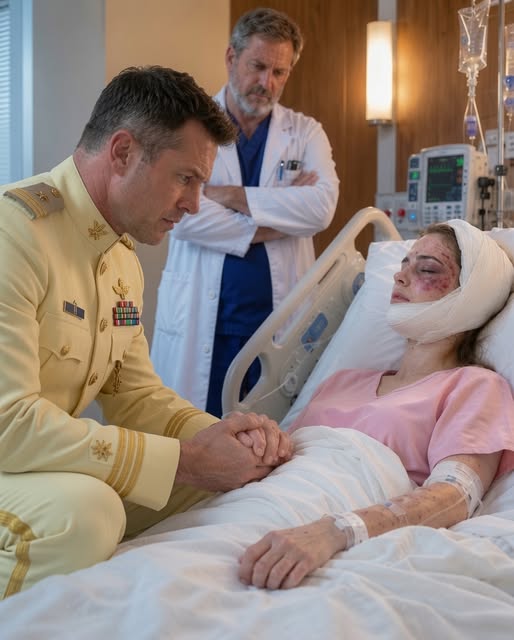
By dawn, the rain had stopped, but the storm inside me had only begun.
Lily had been taken into surgery shortly after four in the morning. The doctors said the operation would last several hours. They needed to stabilize the shattered bones in her jaw, repair damaged tissue, and make sure the swelling did not threaten her airway.
I sat alone in the surgical waiting room, staring at a vending machine that hummed beneath fluorescent lights.
The hospital was quieter now.
Too quiet.
Every few minutes, footsteps echoed down the corridor, and each time, I looked up, expecting someone to bring news that would destroy what remained of my life.
Instead, strangers passed.
A tired nurse carrying charts.
An elderly man leaning on a cane.
A young couple holding hands.
Normal people moving through normal grief.
I envied them because their pain seemed understandable.
Mine was wrapped in questions.
Who had attacked Lily?
Why had no one seen anything?
And why had the doctor looked frightened when I asked about the university?
At 6:12 a.m., a man in a dark gray suit entered the waiting room.
He was in his mid-forties, broad-shouldered, with thinning brown hair and the permanent exhaustion of someone who had spent too many years listening to lies.
“Daniel Mercer?”
I stood.
“Yes.”
He showed me his badge.
“Detective Aaron Cole. Peoria Police Department.”
His handshake was firm but brief.
“I’m investigating your daughter’s assault.”
“Then tell me what you know.”
Cole looked toward the empty chairs.
“Maybe we should sit.”
“I’ve been sitting for two hours. Tell me what you know.”
He studied me for a moment before lowering his voice.
“At approximately ten forty-eight last night, campus security received an anonymous call reporting an injured woman behind the Franklin Science Center. Two officers found Lily unconscious near the loading entrance.”
“Anonymous call?”
“Yes.”
“Male or female?”
“The caller disguised their voice.”
“How?”
“Some kind of digital filter.”
That was not something a frightened witness used by accident.
That required planning.
“Was anything stolen?” I asked.
“Her phone is missing. Her wallet was still in her backpack. Cash, identification, credit cards—everything untouched.”
“So it wasn’t robbery.”
“We’re not ruling anything out.”
“You should.”
Cole’s expression hardened slightly.
“I understand you’re angry.”
“You understand nothing.”
The words came sharper than I intended, but I did not apologize.
“My daughter’s jaw was shattered in six places. Someone hit her repeatedly, left her unconscious in the rain, took her phone, and anonymously reported where she could be found using a voice changer. That wasn’t random.”
Cole remained silent.
Silence had always interested me.
On deployment, silence usually meant one of three things: fear, concealment, or uncertainty.
Cole did not look uncertain.
“What did the cameras show?” I asked.
“We’re still collecting footage.”
“Did they capture the attack?”
“Not directly.”
“That’s not what I asked.”
His jaw tightened.
“There are cameras covering the walkways near the science center. We’re reviewing them.”
“Show me.”
“I can’t release evidence during an active investigation.”
“I’m not asking you to release it.”
“I still can’t.”
Before I could answer, the surgical doors opened.
A nurse stepped into the waiting room.
“Mr. Mercer?”
I crossed the room so quickly that Cole had to move aside.
“How is she?”
“The surgery went as expected. The surgeon was able to stabilize the fractures with plates and screws. She’s being transferred to recovery.”
My knees nearly weakened.
“Can I see her?”
“Not yet. She’ll remain sedated for a while.”
“Did anything go wrong?”
“No major complications.”
No major complications.
It was the best sentence I had heard all night.
The nurse explained that Lily would need another procedure after the swelling decreased. Her jaw might remain wired for weeks. She would not be able to speak normally. Eating would be difficult. Recovery would take months.
Months.
The person responsible had stolen months of her life in less than ten minutes.
When the nurse left, Cole was still standing nearby.
“Mr. Mercer,” he said, “I need to ask you some questions.”
“Ask.”
“Did Lily mention any problems at school? Arguments? Threats? Someone following her?”
“No.”
“A boyfriend?”
“She dated a student named Noah last year. It ended months ago.”
“Last name?”
“Bennett.”
He wrote it down.
“Was the breakup difficult?”
“Not according to Lily.”
“Parents don’t always know everything.”
The statement irritated me because it was true.
I called Lily often, but our conversations had become shorter since she started college. She always sounded busy. She told me about classes, roommates, cafeteria food, and professors who assigned too much reading.
She never said she was afraid.
But perhaps fear had been hidden inside the pauses I had ignored.
“Her roommate,” I said. “Sophie Lang. She’ll know more.”
“We’ve already contacted her.”
“And?”
“She said Lily left the dorm around nine thirty to meet someone.”
“Who?”
“Sophie didn’t know.”
“Did Lily say where she was going?”
“The science building.”
My stomach tightened.
“Why?”
“She received a message.”
“What message?”
“Something about a project.”
“From whom?”
“We don’t know. Her phone is missing.”
“Check her laptop.”
“We are.”
Cole closed his notebook.
“I’ll contact you when we have more.”
“That’s not enough.”
“It’s what I can give you.”
He turned away.
“Detective.”
Cole stopped.
“When you find the person who did this, call me before you arrest them.”
He looked back at me.
“Why?”
“So I have time to remember I’m still a civilized man.”
For the first time, his controlled expression slipped.
“Mr. Mercer, do not interfere with this investigation.”
“Then investigate.”
I spent the next four hours beside Lily’s bed.
She looked smaller beneath the white blankets.
Her face was heavily bandaged. Purple bruising spread around her eyes. A breathing tube had been removed, but oxygen flowed through a clear nasal line. Machines measured every heartbeat.
I watched the monitor because it was easier than looking directly at what someone had done to her.
At noon, her fingers moved.
I leaned forward.
“Lily?”
Her eyelids fluttered.
The left opened slightly.
Confusion appeared first.
Then pain.
Then fear.
I took her hand.
“It’s Dad. You’re safe.”
Her fingers tightened weakly around mine.
“You’re in the hospital. The doctors repaired your jaw.”
Tears gathered in her eye.
“Don’t try to talk.”
Her breathing quickened.
“Lily, listen to me. You survived. That’s all that matters right now.”
She shook her head slightly and winced.
“What is it?”
Her gaze moved toward the chair beside the wall.
A clear evidence bag rested there, containing her torn blue hoodie, backpack, and shoes.
“The bag?”
She blinked once.
I stood and carried it closer.
“You want something inside?”
Her fingers trembled as she raised one hand.
She pointed toward the hoodie.
“This?”
She shook her head.
I examined the bag more carefully.
The hoodie was soaked with dried blood and rainwater. One sleeve had been torn near the shoulder. Mud stained the front pocket.
Then something metallic glinted beneath the folded fabric.
A small silver object.
I pressed the call button.
A nurse entered.
“I need Detective Cole.”
“Sir, I’m not sure—”
“Call him.”
She looked at Lily, then at the evidence bag.
“I’ll contact security.”
Cole arrived twenty minutes later with a uniformed officer.
“You shouldn’t be handling that bag,” he said.
“I didn’t open it.”
He put on gloves and broke the evidence seal.
Using forceps, he lifted the hoodie.
A silver pin fell onto the plastic tray.
It was shaped like a falcon with its wings spread wide. A tiny black stone formed its eye.
Cole’s face changed.
Only for a second.
But I saw it.
“You recognize it,” I said.
“No.”
“You’re lying.”
He ignored me and sealed the pin in a separate evidence pouch.
“What is it?” I demanded.
“Possibly a fraternity emblem.”
“Which fraternity?”
“We’ll determine that.”
“You already know.”
Cole looked at the uniformed officer.
“Take this to evidence.”
The officer left.
Lily’s breathing became faster.
I returned to her bedside.
“Sweetheart, do you know who owns that pin?”
Her eye moved toward the door.
Not toward Cole.
Toward the hallway.
Fear sharpened across her face.
“Someone here?” I asked.
She blinked once.
Cole stepped closer.
“Lily, is the attacker inside this hospital?”
Her fingers began tapping against the rail.
Three taps.
Pause.
Two taps.
I froze.
When Lily was seven, I had taught her a simple family code during a camping trip. It had been a game then. Three taps followed by two meant danger close.
I leaned over her.
“Do you remember our code?”
One blink.
“Three-two means someone dangerous is nearby?”
One blink again.
Cole glanced toward the hallway.
“Who?”
Lily’s gaze shifted to the glass panel in the door.
A shadow moved beyond it.
I ran.
The corridor was empty.
A janitor’s cart stood near the elevator, unattended. Cleaning supplies rested on the lower shelf. A white envelope sat on top.
My name was written across the front.
DANIEL MERCER.
Cole reached me as I picked it up.
“Don’t touch that.”
“Too late.”
He took it carefully and opened it with gloved hands.
Inside was a photograph.
Lily stood outside the Franklin Science Center beneath a stone archway. The image had been taken at night, apparently from a distance. She was speaking to a young man wearing a black coat.
He was tall and clean-cut, with blond hair and a confident smile.
On the back, a message had been written in red ink.
STOP ASKING QUESTIONS, SERGEANT MERCER.
My pulse slowed.
Not accelerated.
Slowed.
That was what always happened when danger became real.
The world narrowed.
Sounds sharpened.
The old instincts returned.
Cole read the message twice.
“Who knows your rank?”
“Plenty of people know I served.”
“It says sergeant specifically.”
“I noticed.”
“Were you ever threatened because of your military work?”
“No.”
“That answer came quickly.”
“Because it’s true.”
Cole studied the photograph.
“Do you recognize the man with your daughter?”
“No.”
Lily made a faint sound behind us.
We returned to the room.
When Cole held up the photograph, her visible eye widened.
“You know him?” he asked.
She blinked once.
“Is he the person who attacked you?”
She hesitated.
Then blinked twice.
No.
“Was he there?”
One blink.
“Yes,” Cole said. “He was there.”
Lily began tapping again.
One.
Four.
One.
Four.
I searched my memory.
Our childhood code had only a handful of combinations.
Three-two meant danger close.
One-four meant trust no one.
My eyes moved to Cole.
He noticed.
“What does that mean?”
“Nothing.”
“Mr. Mercer—”
“She’s exhausted.”
I took the photograph from him and studied the young man.
A small silver falcon pin was attached to the lapel of his coat.
“There,” I said.
Cole stared at it.
“You know exactly what that symbol means.”
He exhaled through his nose.
“It belongs to a private campus organization called the Hawthorne Society.”
“Fraternity?”
“Not officially.”
“What does that mean?”
“It means they aren’t registered as a fraternity. They call themselves an academic leadership society.”
“Who joins?”
“Students from influential families. Athletes. Political families. Donors’ children.”
“And the university protects them.”
“I didn’t say that.”
“You didn’t have to.”
Cole pulled a chair near the door.
“The Hawthorne Society has been around for decades. They own a private house near campus. They’ve been accused of hazing, harassment, and covering up misconduct.”
“Accused?”
“No charges were ever filed.”
“Because no crimes happened?”
He looked away.
“Because witnesses stopped cooperating.”
I stared at the photograph again.
“Who is he?”
“I’ll find out.”
“You already know.”
Cole’s expression hardened.
“I recognize the symbol, not every member.”
“Then start with university records.”
“That takes time.”
“No. It takes a phone call.”
“You think police investigations work like combat operations.”
“No. In combat, people admit there’s an enemy.”
Cole stood.
“I’m going to speak with campus security.”
“I’m coming.”
“No.”
“You’re not leaving me here while the person who delivered this envelope walks around the hospital.”
“I’ll post an officer outside Lily’s room.”
“An officer who reports to you?”
He looked at me sharply.
“Careful.”
“I am being careful.”
After Cole left, a uniformed officer took position outside the door.
His name was Officer Ryan Doyle. He looked young enough to still believe rules protected innocent people.
I waited until Lily fell asleep.
Then I called Sophie Lang.
She answered after the third ring.
“Mr. Mercer?”
Her voice trembled.
“Yes. I need you to tell me why Lily went to the science building last night.”
“I already told the police. She got a message about her biology project.”
“From whom?”
“I don’t know.”
“Sophie.”
Silence.
I softened my voice.
“My daughter is lying in a hospital bed with metal plates holding her face together. Whoever did this may come back. I need the truth.”
Sophie began crying.
“She made me promise not to tell anyone.”
“What?”
“There was a video.”
My grip tightened on the phone.
“What video?”
“Lily found it by accident. Someone sent her the wrong cloud-storage link. It showed a party at the Hawthorne House.”
“What happened at the party?”
“I never saw all of it.”
“What did you see?”
“A girl was unconscious on a couch. Some boys were laughing. One of them said they needed to move her before security arrived.”
“Who was the girl?”
“I don’t know.”
“Did Lily?”
“She thought it was Maya Torres.”
The name sounded familiar.
Then I remembered a local news report from two months earlier.
Maya Torres, a Bradley University freshman, had died after falling from a parking structure. Police had ruled it suicide.
“Lily believed Maya didn’t kill herself,” Sophie whispered.
My blood went cold.
“What was Lily going to do with the video?”
“She copied it.”
“To where?”
“I don’t know. She said she hid it somewhere safe.”
“Who knew she had it?”
Sophie hesitated.
“Lily confronted someone.”
“Who?”
“Evan Hawthorne.”
The surname struck me.
“Hawthorne?”
“His grandfather founded the society. His father is on the university board.”
“Was Evan the man in the photograph?”
“I don’t know.”
I described him.
Tall. Blond. Black coat.
“Yes,” Sophie whispered. “That’s Evan.”
“Why did Lily meet him?”
“He said he wanted to explain what happened to Maya.”
“Did she go alone?”
“She said she would.”
“You let her?”
“She told me she was meeting him inside the science building, where cameras were everywhere.”
The camera blackout returned to my mind.
“She thought she’d be safe,” Sophie said.
“So did I.”
After the call, I searched Evan Hawthorne’s name online.
His face appeared immediately.
He was twenty-one, a senior studying political science. Captain of the university rowing team. Son of state senator Richard Hawthorne. Grandson of billionaire donor Charles Hawthorne, whose name appeared on three campus buildings.
In every photograph, Evan wore the same easy smile.
The smile of someone who had never been forced to fear consequences.
I looked through news reports about Maya Torres.
Her body had been found beneath the university’s west parking garage at three in the morning. Campus police claimed she had been alone. Her blood-alcohol level was high. The university issued a statement about student mental health.
Her parents insisted she was not suicidal.
The case closed within ten days.
Too quickly.
I called an old friend named Marcus Reed.
Marcus and I had served together in Afghanistan. After leaving the military, he became a cybersecurity consultant in Chicago. He answered with his usual greeting.
“You only call before sunrise when someone’s dead or you need bail money.”
“My daughter was attacked.”
The humor vanished.
“What happened?”
I told him everything.
Not the emotional parts.
Only facts.
Marcus listened without interrupting.
“I need you to find out who disabled the campus cameras,” I said.
“That would be illegal.”
“Yes.”
“How illegal?”
“Enough that you should probably complain for several minutes before agreeing.”
He sighed.
“Send me whatever you have.”
“I have nothing.”
“Then get me access logs, camera model numbers, network addresses—anything.”
“I’ll find them.”
“Daniel.”
“What?”
“Don’t become the man you were over there.”
I looked at Lily.
“That man kept people alive.”
“That man also stopped sleeping.”
“I’m not planning to sleep.”
An hour later, Detective Cole returned.
His face was grim.
“The camera system experienced an interruption from ten thirty-one to ten thirty-eight.”
“Only near the science center?”
“Yes.”
“Then it wasn’t the storm.”
“No.”
“Who had access?”
“Campus security administrators and two university IT technicians.”
“Names?”
“I can’t—”
“Evan Hawthorne.”
Cole’s eyes narrowed.
“How do you know that name?”
“Lily’s roommate.”
“You contacted a witness after I told you not to interfere?”
“I contacted my daughter’s friend.”
“That can compromise her statement.”
“Did she tell you about Maya Torres?”
His silence answered.
“You knew,” I said.
“I knew Lily had asked questions about Maya’s death.”
“And you didn’t think that mattered?”
“I think everything matters. I also know accusing the son of a state senator without evidence is a good way to destroy an investigation.”
“He’s in the photograph with her.”
“That proves they spoke.”
“He belongs to the society whose pin was found in her hoodie.”
“Several dozen students own those pins.”
“He asked her to meet him.”
Cole took a slow breath.
“We brought Evan in for questioning this morning.”
That surprised me.
“What did he say?”
“He admitted meeting Lily.”
“And?”
“He said she showed him part of the video and demanded the truth about Maya.”
“What truth?”
“He claims Maya attended a Hawthorne party, became intoxicated, and left alone.”
“Do you believe him?”
“I believe he’s hiding something.”
“Where was he during the attack?”
“He says he left the science building at ten twenty-five.”
“The camera failed at ten thirty-one.”
“He was seen entering a restaurant at ten forty-two.”
“That leaves seventeen minutes.”
“The restaurant is eight minutes from campus.”
“Enough time.”
“Yes.”
“Then arrest him.”
“Suspicion isn’t probable cause.”
“Ask Lily whether he did it.”
“I already did. She said no.”
“He could have ordered someone else.”
Cole leaned closer.
“Listen to me. Evan Hawthorne’s attorneys arrived before we finished the first interview. The university president called the police chief. Senator Hawthorne called the mayor.”
“And now you’re afraid.”
“Now I know that if we move too early, every record disappears, every witness changes their story, and every door closes.”
“They’re already closing.”
“I need Lily’s video.”
“So do I.”
“You know where it is?”
“No.”
Lily stirred.
Her eye opened.
I sat beside her.
“Sweetheart, Sophie told me about the video.”
Fear returned instantly.
“You made a copy?”
One blink.
“Is it on your laptop?”
Two blinks.
“Cloud storage?”
Two.
“Did you give it to someone?”
One blink.
“Who?”
She looked toward the evidence bag again.
Her backpack had been returned after processing. Cole opened it carefully.
Inside were notebooks, pens, textbooks, and a small paperback novel.
Nothing electronic.
Lily tapped twice, paused, then tapped five times.
I frowned.
That code meant remember home.
“What at home?” I asked.
She shut her eye in frustration.
I thought about our house.
Her childhood bedroom.
Old photographs.
Books.
Christmas decorations.
Then I remembered the call she made three days earlier.
“Dad,” she had said, “did you keep Mom’s old recipe box?”
I had laughed because Lily rarely cooked.
“Yes. It’s still in the pantry.”
“Don’t throw it away.”
At the time, the request meant nothing.
Now it meant everything.
“The recipe box,” I whispered.
Lily blinked once.
Cole straightened.
“You believe the video is at your house?”
“She mailed something to me.”
“How do you know?”
“I don’t. But she asked about an object she hasn’t mentioned in years.”
“We need to retrieve it.”
“We?”
“Yes. You’re not going alone.”
We left Officer Doyle outside Lily’s room and drove to my house in separate cars.
The forty-minute trip felt longer than the night before.
I watched every vehicle in the mirror.
Twice, a black SUV remained behind me through several turns. It disappeared near the interstate exit.
When we reached my street, my front door was open.
Cole drew his weapon.
“Stay behind me.”
I ignored him and entered through the side.
The living room had been destroyed.
Couch cushions slashed.
Drawers emptied.
Photographs torn from walls.
Kitchen cabinets open.
Someone had searched quickly and violently.
The pantry door hung crooked.
The recipe box was gone.
Cole cursed under his breath.
“They beat us here.”
“No.”
I looked at the flour scattered across the floor.
A single set of muddy footprints crossed the kitchen, but the mud pattern was too deliberate. Someone wanted us to believe the intruder entered from the yard.
The broken front lock had splintered outward.
The door had been forced from inside.
“They were already in the house,” I said.
Cole examined the frame.
“You’re right.”
I walked into Lily’s old bedroom.
Her bookshelf had been emptied.
The mattress lay overturned.
A framed photograph of Lily and her mother had been smashed.
I picked it up.
My wife, Claire, had died from cancer when Lily was eleven. The recipe box had belonged to her.
That was why Lily chose it.
Not because it was hidden.
Because she trusted me to protect it.
And I had failed.
Cole’s phone rang.
He stepped into the hallway.
I heard only his side of the conversation.
“When?”
A pause.
“Lock down the room.”
Another pause.
“No one enters.”
He ended the call and looked at me.
“We need to return to the hospital.”
“What happened?”
“The officer outside Lily’s room was found unconscious in the stairwell.”
My heart stopped.
We drove back with lights and sirens.
I called the nurses’ station repeatedly, but no one answered.
When we reached the second floor, hospital security had sealed the corridor.
Officer Doyle was being treated near the stairwell. A needle mark showed on his neck.
Lily’s room was empty.
The bed sheets had been pulled aside.
The monitors were disconnected.
A nurse stood against the wall, crying.
“Where is my daughter?” I demanded.
“She was here five minutes ago.”
“How does a patient with a shattered jaw disappear from a hospital?”
“A man in surgical scrubs said she needed emergency imaging.”
“Did you check his identification?”
“He had a hospital badge.”
Cole grabbed the security supervisor.
“Camera footage. Now.”
We ran to the monitoring station.
A recording showed a masked man pushing Lily’s bed toward the service elevator. He wore blue scrubs and a surgical cap. His face was hidden.
At 1:26 p.m., the elevator doors closed.
The next camera showed the bed emerging in the basement.
Then nothing.
The basement loading-dock camera had been disabled.
Again.
Exactly like the university cameras.
My hands curled into fists.
Cole received another call.
This time, he looked directly at me while listening.
“What is it?” I asked.
He put the phone on speaker.
A distorted voice filled the room.
“Sergeant Mercer.”
I recognized the digital filter immediately.
“Where is my daughter?”
“She is alive.”
“Let me hear her.”
“You are not in a position to make demands.”
“You chose the wrong family.”
The voice gave a quiet laugh.
“No, Daniel. We chose precisely the right family.”
A chill moved through me.
“Who are you?”
“You have something that belongs to us.”
“The video?”
“Not only the video.”
“What else?”
“Ask yourself why Lily was watching Maya Torres in the first place.”
I looked at Cole.
“What does that mean?”
The voice continued.
“Bring the original file to the abandoned rail depot outside Chillicothe at midnight. Come alone. No police. No weapons.”
“I don’t have the file.”
“You will find it.”
The call ended.
For several seconds, no one spoke.
Cole immediately ordered a trace.
The technician shook his head.
“Internet relay. Multiple foreign servers.”
I stared at the frozen security image of the masked man pushing Lily away.
Something bothered me.
His posture.
The way his right shoulder dipped.
The slight outward turn of his left foot.
I had seen that walk before.
A long time ago.
In another country.
Under another sky.
I zoomed in on the man’s hand gripping the bedrail.
A faded scar crossed his wrist.
My chest tightened.
Only four people alive knew I had been a sergeant in the special reconnaissance unit where I served.
Marcus Reed.
My former commander, Colonel James Vaughn.
Me.
And Thomas Rainer.
Thomas had died twelve years earlier during an operation in Kandahar.
I had watched the building collapse with him inside.
Or at least, I believed I had.
Cole noticed my expression.
“You recognize him.”
I looked at the masked figure.
“That man is dead.”
“Who?”
Before I could answer, my phone buzzed.
A message had arrived from an unknown number.
It contained a photograph of Lily lying unconscious inside a dark vehicle.
Beside her face rested my wife Claire’s missing recipe box.
Below the image were seven words.
YOU WERE NEVER TOLD HOW CLAIRE REALLY DIED.
My breath left me.
Claire had died in a hospital after eighteen months of cancer treatments.
I had been with her at the end.
I had held her hand.
I had buried her.
But beneath the message was another photograph.
Claire stood outside the Hawthorne House, alive and healthy, beside Senator Richard Hawthorne.
The date printed in the corner was three years after her funeral.
And behind them, smiling directly at the camera, stood Thomas Rainer.
The dead man from my past.
The man who had just taken my daughter.
For the first time since Lily’s attack, I understood that this had never begun with her.
It had begun with me.
…If you want to know what happened next, please type “YES” and like for more.