PART 2
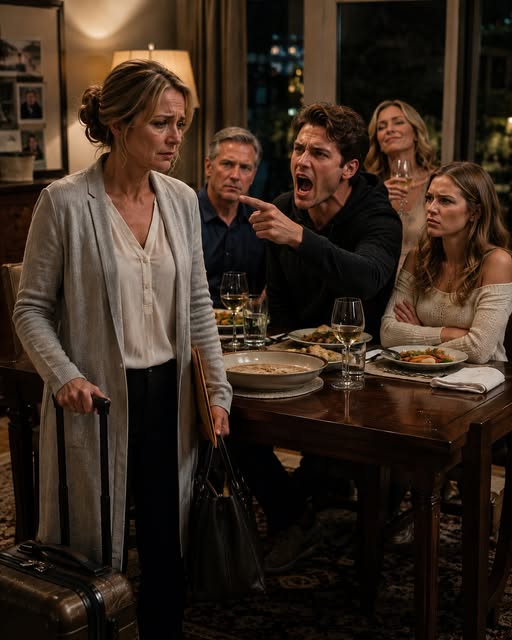
I did not disappear dramatically.
There was no storm, no screeching tires, no cinematic scene where I stood on a bridge in the rain deciding whether to throw my wedding ring into the river.
I drove twenty-eight minutes across Portland to a small furnished apartment above a bakery in Sellwood, a place I had found two years earlier when Daniel and I had gone through what he called “a rough patch” and what I called “the first warning.”
Back then, I had not rented it.
This time, I did.
The apartment smelled like cinnamon at dawn and yeast by noon. The floors slanted slightly toward the front windows. The radiator knocked like an old man clearing his throat. It was small, quiet, and entirely mine.
I set my suitcase on the bed, placed the folder of financial records on the little kitchen table, and sat down without turning on a single light.
For twelve years, my life had been measured by other people’s needs.
Ethan needs cleats by Friday.
Lily needs a ride at four.
Daniel needs the account covered until next month.
Vanessa forgot again.
School called again.
Insurance renewed again.
The mortgage is due again.
Silence felt unnatural at first. Almost rude.
Then it felt merciful.
My phone began vibrating at 7:42 that Monday morning.
Daniel called first.
Then Ethan.
Then Lily.
Then Daniel again.
By noon, my screen looked like a family emergency, except I knew better. No one had been in an accident. No one was lying in a hospital bed. No one was truly afraid for me.
They were afraid of the empty spaces I had left behind.
I opened my banking app and did what I should have done years earlier.
I separated every account.
My salary went into my personal savings. The emergency fund I had built alone stayed with me. The tuition support account, under my name, was frozen pending review. The joint credit card I had paid for, despite Daniel being the primary spender, was closed after I cleared the balance. I removed Ethan’s vehicle from my policy and sent the required notice. I canceled the scheduled payment to Lily’s private art program, which I had arranged as a favor, not an obligation.
Then I made coffee in a chipped blue mug and watched the rain stitch silver lines down the window.
At 3:16 p.m., Lily texted.
Where did you go?
I stared at the message for longer than I should have.
There were so many things I could have said.
I went where unpaid bills cannot follow.
I went where “basic respect” is not considered a favor.
I went where I do not have to apologize for loving children who used me.
Instead, I locked the phone.
By Tuesday, the tone of the messages changed.
Daniel: Claire, come home. We need to talk.
Ethan: Why is my insurance saying terminated?
Lily: My program office said payment was withdrawn. Did you do that?
Daniel: You’re punishing the kids now?
Ethan: This is insane. You can’t just cut me off.
Lily: Please answer me.
Please.
That one almost broke something in me.
Almost.
Because I remembered the Sunday dinner table. Vanessa’s smile tucked behind her wineglass. Daniel’s silence. Ethan’s fork hitting the plate. Lily’s polished little shrug.
You helped Dad. That’s different.
Different.
For twelve years, different had looked a lot like motherhood when the lights were off and no one was watching.
I did not answer.
On Wednesday morning, Vanessa called.
I had not expected that.
Her name appeared on my screen while I was standing in the bakery downstairs, waiting for a croissant I had no appetite for. The woman behind the counter slid my coffee toward me and gave me a sympathetic smile, though she had no idea who I was or what had happened.
I let the call ring out.
A minute later, a text arrived.
Vanessa: We should talk.
I almost laughed.
The last time Vanessa had said those words to me, Lily was fourteen and sobbing in the upstairs bathroom because her mother had forgotten to pick her up from a school dance. Vanessa had arrived the next day with apologies, a shopping bag, and a story about traffic that did not survive basic geography.
“We should talk,” she had told me then, standing in my kitchen as if she owned the grief in the house.
I had said, “About Lily?”
Vanessa had said, “About boundaries.”
Boundaries, to Vanessa, meant I should do the work but never be seen doing it. I could buy the dress, but she would take the photo. I could wait in the ER, but she would post the update. I could remember the allergies, the schedules, the anxieties, the fever patterns, the teacher conferences, the college deadlines.
But I was never to use words like our children.
They had a mother.
She was simply unavailable whenever motherhood required effort.
At noon, she texted again.
Vanessa: I know where you are.
My hand tightened around the phone.
There it was.
Not concern. Not apology. Control.
I looked around the little apartment, at the crooked bookshelf, the half-unpacked suitcase, the folder of records on the table. I suddenly understood that leaving the house had not freed me from them. Not yet.
So I answered.
Claire: Then you know I’m not lost.
She replied almost instantly.
Vanessa: The kids are upset.
Claire: They are adults.
Vanessa: They said things. They were angry.
Claire: They said what they meant.
A pause.
Then:
Vanessa: You don’t know everything.
I stared at those four words until they blurred.
A knock came at my apartment door just before six that evening.
Not Daniel’s heavy, impatient knock. Not Ethan’s careless fist. Not Lily’s quick double tap.
Three measured strikes.
When I opened the door, Vanessa Mercer stood in the hallway wearing a cream wool coat, gold hoops, and the expression of a woman who had rehearsed weakness in a mirror and decided it looked flattering.
“You changed your hair,” she said.
I had not.
“Vanessa.”
Her gaze flicked past me into the apartment. “You’re really living here?”
“For now.”
She exhaled, almost a laugh. “Claire, this is absurd.”
I stepped into the hallway and closed the door behind me.
Her eyes sharpened. “You’re not inviting me in?”
“No.”
For the first time since I had known her, Vanessa looked genuinely surprised.
The hallway smelled faintly of sugar and old wood. Downstairs, someone laughed in the bakery kitchen. Normal life went on beneath us, indifferent and warm.
Vanessa crossed her arms. “Daniel is worried.”
“Daniel is inconvenienced.”
“The kids are hurt.”
“The kids are uninsured and underfunded. That is not the same thing.”
Her jaw tightened. “You always did have a way of making yourself sound noble.”
I smiled a little. It felt strange on my face. “And you always had a way of making abandonment sound like a scheduling conflict.”
Color rose in her cheeks.
For a moment, I saw her clearly. Not as Lily and Ethan’s glamorous, elusive mother. Not as the shadow at every dinner table. Just a woman who had spent years letting other people absorb the cost of her choices.
Then she said something I did not expect.
“I told them to say it.”
The hallway seemed to narrow.
“What?”
Vanessa looked away first. “Not those exact words.”
My heartbeat slowed in a way that felt dangerous.
“You told Ethan and Lily to tell me I didn’t raise them?”
“I told them they needed to establish boundaries with you.”
“Boundaries.”
“You were getting too involved.”
I laughed once, low and humorless. “I paid your daughter’s tuition deposit three weeks ago.”
“I know.”
“I covered Ethan’s insurance after he totaled Daniel’s truck.”
“I know.”
“I sat beside Lily when she had an allergic reaction at sixteen because you didn’t read the restaurant menu.”
Her mouth hardened. “I said I know.”
“Then what exactly was I too involved in, Vanessa?”
She looked at me then, and for the first time her mask slipped enough for something ugly and frightened to show underneath.
“The trust.”
I went still.
There are words that enter a room quietly and rearrange every piece of furniture.
Trust was one of them.
“What trust?”
Vanessa’s face changed again. Too late, she realized she had said more than she intended.
I stepped closer. “What trust, Vanessa?”
She swallowed. “You should ask Daniel.”
“I’m asking you.”
“That’s not why I came.”
“Then why did you?”
She glanced toward the stairwell like she wanted to leave, but pride pinned her in place.
“I came because Ethan’s car insurance has to be reinstated by Friday or his campus parking permit gets revoked. Lily’s program director called me personally. They’re embarrassed. Daniel’s mortgage account is short. You made your point.”
“My point,” I repeated.
“You can’t destroy everyone because your feelings were hurt.”
There it was again. The neat reduction. Twelve years compressed into hurt feelings.
I opened the apartment door behind me.
Vanessa blinked. “Claire—”
“No. You came here to see whether I was crying. Whether I could be guilted back into service. Whether I would panic if you mentioned the children. You miscalculated.”
“You’re being vindictive.”
“I’m being absent.”
I stepped inside.
Before I closed the door, I said, “Tell Daniel I’ll speak to him with my attorney present.”
Vanessa’s eyes widened.
Then I shut the door.
My hands shook for ten minutes.
Not because of Vanessa.
Because of the trust.
That night, I opened the folder I had taken from the house.
It contained bank statements, receipts, tuition records, copies of checks, mortgage payments, insurance documents, and handwritten notes I had made over the years when money moved in ways that did not make sense.
I had started keeping records after Daniel’s business nearly collapsed. Back then, I thought I was protecting us from creditors. Later, I told myself it was just habit.
Now I wondered whether some part of me had always known.
Daniel called seventeen times after Vanessa left.
I answered on the eighteenth.
His voice came through tight and breathless. “Where are you?”
“You know where I am.”
“Claire, this has gone far enough.”
“I agree.”
A pause.
“What does that mean?”
“It means I know about the trust.”
Silence.
Not confusion. Not surprise.
Silence.
Then Daniel said, carefully, “What did Vanessa tell you?”
Enough.
Only enough to show me where the floor had been hollow.
“What trust, Daniel?”
He sighed, and even that made me angry. He sounded exhausted by my discovery, as if the burden had fallen unfairly on him.
“It’s complicated.”
“Make it simple.”
“It was set up by my father before he died.”
“For Ethan and Lily?”
“Yes.”
“How much?”
“Claire—”
“How much?”
Another pause.
“Originally? Around four hundred thousand each.”
I sat down slowly.
The radiator knocked once beside me.
Four hundred thousand each.
Ethan’s tutor. Lily’s art program. School fees. Medical bills. College deposits. Car insurance. Emergency dental surgery. Summer programs. Application costs. Rent advances. Groceries. Gas cards. Everything I had paid because Daniel said things were tight. Everything Vanessa had forgotten. Everything the children had needed.
Four hundred thousand each.
“Where is it?” I asked.
Daniel’s breathing changed.
“Most of it is still there.”
“Most?”
“It was restricted. There were conditions.”
“What conditions?”
“They couldn’t access it until twenty-five unless both biological parents signed approval for educational or medical expenses.”
I closed my eyes.
Both biological parents.
No wonder Vanessa had smiled.
No wonder Daniel had looked away.
For twelve years, I had been useful precisely because I was not their mother.
I had no legal claim, no required signature, no guaranteed recognition. I was the soft place they could spend without paperwork. The woman who would fill the gaps while the real money sat untouched.
“Why didn’t you use it for their expenses?” I asked.
Daniel’s voice lowered. “Dad wanted it protected.”
“From what?”
“Bad decisions.”
“Whose?”
He did not answer.
And there, in that silence, something inside me finally stopped reaching for him.
“You let me drain my savings,” I said.
“I didn’t let you. You offered.”
“I offered because you told me the children needed help.”
“They did need help.”
“They had eight hundred thousand dollars.”
“It wasn’t liquid.”
“Tuition is an approved educational expense.”
“Vanessa wouldn’t sign.”
I almost stood up, though there was nowhere to go.
“Why?”
He made a frustrated sound. “Because she thought if the accounts stayed untouched, they’d get the full amount later.”
“And you agreed?”
“I was trying to keep peace.”
“No. You were keeping me uninformed.”
“Claire, we were married. The family money was family money.”
“My savings were not family money when I earned them. They became family money when you needed them.”
“That’s unfair.”
“No,” I said softly. “It is accurate.”
He said my name then. Not Claire, but the version he used when he wanted me to soften. “Come home. We’ll talk through all of this. The kids are devastated.”
“Are they devastated that I left, or devastated that the bills followed me?”
“They love you.”
I let the words sit between us.
Once, I would have given anything to hear that.
Now it sounded like another invoice.
“Tell them to use the trust,” I said.
“Vanessa won’t sign.”
“Then tell them to ask their mother why.”
“They’re angry.”
“They should be.”
“At you.”
“For now.”
His voice hardened. “You’re making a mistake.”
“No, Daniel. I’m correcting one.”
I hung up.
The next morning, I met with an attorney named Mara Klein, whose office overlooked the Willamette River and whose handshake was cool, firm, and uninterested in tears.
She read through my documents for nearly an hour without interrupting me. Her pen moved occasionally. Her expression did not.
When I finished, she leaned back and said, “You paid substantial expenses for your adult stepchildren and marital household under what may have been incomplete or misleading financial information.”
“That sounds cleaner than it felt.”
“Legal language often does.”
“Can I get it back?”
“Some of it, possibly. Some, no. Gifts are difficult. Payments toward marital property may be recoverable depending on account structure and intent. The bigger question is what your husband concealed and whether marital assets were misrepresented.”
“What about the trust?”
“We need documents.”
“I don’t have them.”
“Then we request them.”
I looked down at my hands. “They’ll say I’m bitter.”
Mara’s face remained calm. “That is not a legal argument.”
For the first time in days, I almost smiled.
By Friday, Ethan called from an unknown number.
I knew it was him before he spoke. The silence gave him away. Ethan had always breathed like he was bracing for impact.
“Claire?”
I stood at the apartment window, watching a delivery truck block the bakery entrance.
“Yes.”
“Why did you cancel my insurance?”
“Because I was paying for it.”
“You could’ve warned me.”
“I did. At dinner. You said I didn’t need anything from you.”
He exhaled sharply. “I was mad.”
“I know.”
“People say stuff when they’re mad.”
“They also say stuff when they believe there won’t be consequences.”
Silence.
Then, quieter, “Lily’s freaking out.”
“About the art program?”
“About everything.”
I heard traffic behind him. Campus noise. Young voices. A life I had helped build, now calling me from the far side of a sentence he could not unsay.
“Did your mother tell you about the trust?” I asked.
His silence changed.
So he knew.
“Dad said it’s complicated.”
“It is not complicated. You and Lily have money for education. Your mother refused to sign for it. Your father let me pay instead.”
“That’s not—” He stopped.
“Not what?”
Another silence.
When he spoke again, he sounded younger. Almost ten. Almost the boy with his fists in his hoodie pockets.
“Mom said you liked paying because it made you feel important.”
The words did not strike like Sunday’s had.
These slid in colder.
Of course she had.
Vanessa had not merely let me be useful. She had taught them to see my usefulness as vanity.
“She was wrong,” I said.
“She said you’d hold it over us one day.”
“I held it under you, Ethan. For twelve years. There’s a difference.”
His breathing hitched.
I waited.
But apology requires a kind of courage, and Ethan was not there yet.
“So what now?” he asked.
“Now you talk to your parents.”
“You’re my parent too.”
I closed my eyes.
There it was. The word, offered only after the funding disappeared.
“No,” I said.
His breath caught.
“You made that clear.”
“Claire—”
“I am not saying this to hurt you. I am saying it because I finally listened.”
He did not respond.
I ended the call before I could rescue him from the silence.
Lily came two days later.
She did not knock like Vanessa. She scratched once at the door, almost timidly, then wrapped both arms around herself when I opened it.
She looked tired. No makeup. Hair in a loose knot. Rain clung to the shoulders of her coat.
“Hi,” she said.
“Hi, Lily.”
Her eyes moved over my face, searching for the old Claire. The one who would pull her inside, make tea, ask if she had eaten, pretend nothing was broken as long as Lily looked fragile enough.
I stayed in the doorway.
“Can I come in?”
“No.”
Her face crumpled before she caught it. “Wow.”
“You can say what you came to say from there.”
“I came to apologize.”
I waited.
She looked down. “What I said was cruel.”
“Yes.”
“And ungrateful.”
“Yes.”
“And not completely true.”
There it was. Not completely.
A small, careful offering. Small enough to withdraw.
I said nothing.
Her eyes flashed then, hurt turning quickly into offense. “I’m trying.”
“I know.”
“Then why are you making this so hard?”
The question was so familiar I nearly laughed. Lily had always believed discomfort meant someone else was doing something wrong.
“I am not making it hard,” I said. “I am not making it easy.”
She swallowed.
“Mom said you left because you wanted us to beg.”
“What do you think?”
“I don’t know.” Her voice cracked. “I don’t know what I think anymore.”
That was the first honest thing she had said.
A car passed below, tires hissing over wet pavement.
“I found out about the trust,” she whispered.
“I assumed.”
“Dad says Grandpa wanted it saved for when we were older.”
“Did Grandpa also want me paying your invoices?”
She flinched.
“I didn’t know how much you paid.”
“You never asked.”
“I was a kid.”
“You were. Now you are not.”
Her lips trembled. “You really just turned everything off.”
“Yes.”
“How could you?”
The question hung between us, enormous and absurd.
I looked at the young woman I had loved through fevers, heartbreaks, slammed doors, art shows, nightmares, college essays, and birthdays where Vanessa arrived late with expensive gifts and everyone pretended that late was still present.
“How could I?” I asked quietly. “Lily, I learned from your mother.”
Her eyes filled.
“That’s not fair.”
“No. It isn’t.”
She wiped her cheek angrily. “So what do you want from us?”
I thought about that.
At the Sunday dinner table, I had wanted recognition. An apology. Daniel’s defense. Vanessa exposed. The children ashamed.
But standing there in the doorway, I realized I no longer wanted to be repaid in tenderness they had to borrow against crisis.
“I want nothing from you right now,” I said.
“That’s worse.”
“I know.”
She stared at me as if I had become someone she did not recognize.
Maybe I had.
Before she left, she pulled a folded envelope from her coat pocket.
“I found this in Mom’s desk,” she said. “I wasn’t snooping. I was looking for the trust paperwork.”
I did not take it.
“What is it?”
“I think you should read it.”
“Why?”
“Because it has your name on it.”
She placed it on the floor between us and walked away before I could ask anything else.
For a long while, I stood there looking at the envelope.
It was old, cream-colored, and sealed with tape that had yellowed at the edges. My name was written across the front in handwriting I did not recognize.
Claire Whitmore.
Not Mercer.
Whitmore.
My maiden name.
I picked it up and carried it to the kitchen table.
Inside was a letter dated thirteen years earlier.
One year before I married Daniel.
The paper trembled in my hands as I read.
Dear Ms. Whitmore,
You do not know me, though I expect you may one day know my son Daniel and my grandchildren, Ethan and Lily. I am writing this because I have watched my family make a habit of using silence as currency, and I do not wish to die leaving only money behind.
Daniel is charming when he needs to be. Vanessa is helpless when it profits her. The children are still young enough to be saved from both.
If you are reading this, it means you stayed.
For that, I am sorry.
I stopped breathing.
The letter went on.
There is a trust for Ethan and Lily. It is meant for their education, medical care, and eventual independence. It is not meant to sit untouched while another person pays the cost of raising them. If Daniel or Vanessa tells you otherwise, they are lying by omission.
I have asked my attorney to provide you, upon request, documentation of the trust should you become a legal spouse to Daniel Mercer. I do this because I believe you may be the only adult in that household inclined to act in the children’s actual interest.
A noise escaped me. Not a sob. Not quite.
At the bottom was a name.
Arthur Mercer.
Daniel’s father.
And beneath it, one final line.
Vanessa has been given a copy of this letter.
I sat there until the bakery lights below went dark.
Vanessa had known.
Not after the wedding. Not after the first tuition bill. Not once things became complicated.
Before.
Before I packed the lunches.
Before I sat through the games.
Before I wrote the checks.
Before I became useful.
Before I learned to love children who were being taught to misunderstand me.
Vanessa had held proof in her hands for thirteen years.
And hidden it.
My phone buzzed.
A message from Mara Klein.
Mara: We received a response to the preliminary inquiry. There is more than one trust. Call me as soon as possible.
I looked back at Arthur Mercer’s letter.
More than one trust.
Outside, rain tapped softly against the glass, patient as a secret.
Then a second message arrived.
Unknown number.
Claire, this is Arthur Mercer’s former attorney. You need to know what Daniel did before you married him.
I read the sentence three times.
And for the first time since Sunday dinner, I felt something other than grief.
I felt the floor opening beneath all of them.
…If you want to know what happened next, please type “YES” and like for more.