PART 3: THE FOLDER THAT WOKE THE DEAD
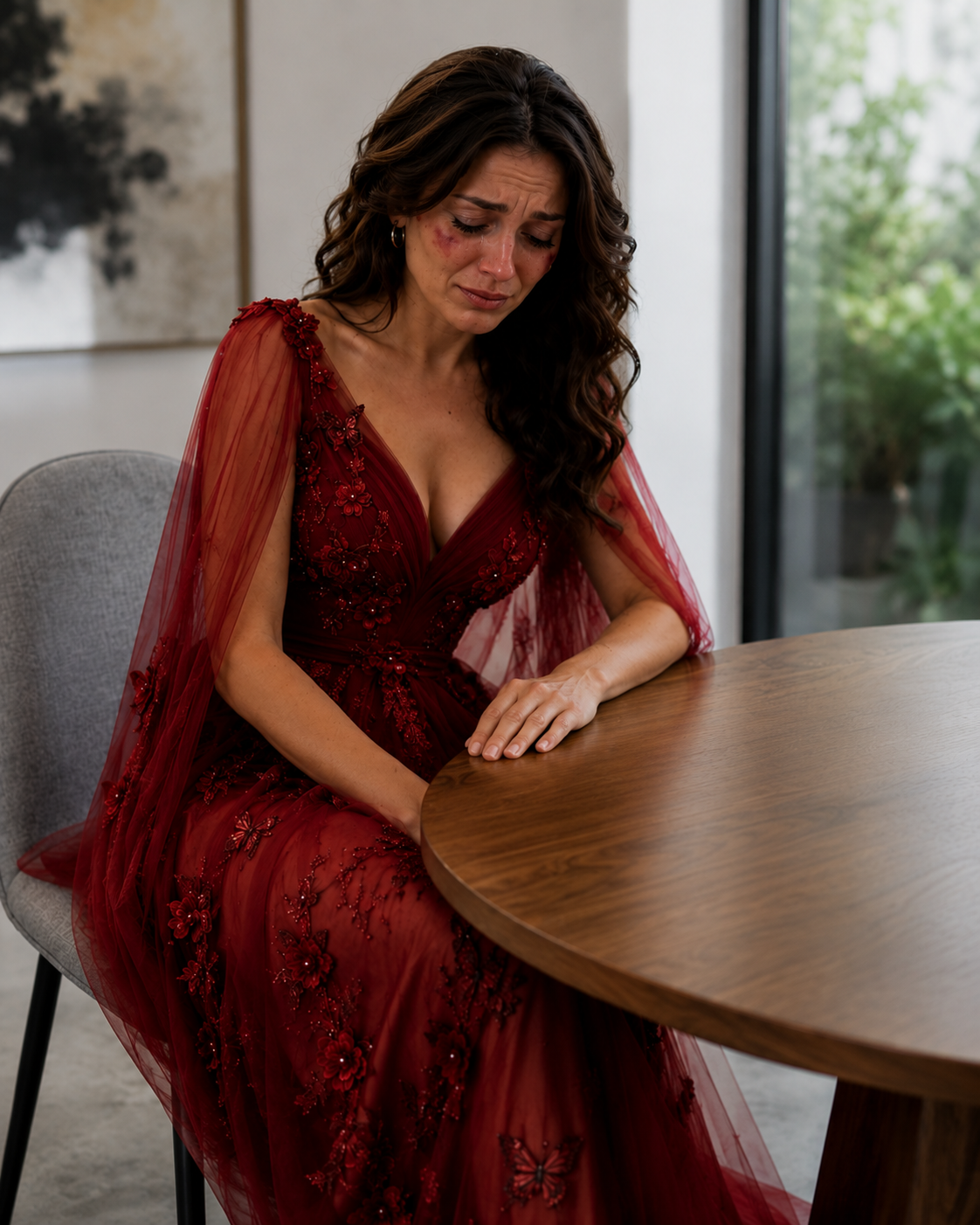
Clara’s face turned the color of ash when I said the name Valencia.
For a moment, she did not move. The garden behind her was bright with morning sun, birds singing as if the world had not just cracked open beneath my feet.
“Where did you hear that name?” she whispered.
“From Alejandro.”
Her hand tightened around the back of my wheelchair.
“What exactly did he say?”
“He told me to open the folder named Valencia. He said my mother wasn’t innocent. He said you left Mexico because of it.”
The silence that followed was worse than any answer.
Clara looked away.
That was when fear truly entered me.
Not because Alejandro might be telling the truth. But because Clara, the woman who had flown across countries to save me, suddenly looked like someone standing in front of a locked door she had prayed would never open.
“Clara,” I said, my voice trembling. “Who was Valencia?”
She sat slowly on the bench beside me.
“Valencia was not a person,” she said. “It was a company.”
My throat tightened.
“My father’s company?”
She nodded.
“Your father, Ignacio Rivera, built Valencia Medical Supplies from nothing. He sold surgical equipment to hospitals across Mexico. Honest contracts. Honest work. Then the Montes family wanted in.”
“Teresa?”
“Teresa, her husband, and later Alejandro.” Clara swallowed. “They needed access to public hospital contracts. Your father had that access. They offered partnership. He refused.”
I gripped the blanket across my knees.
“And then?”
“Then his company was accused of fraud.”
The word hit like a slap.
“No.”
“Sofía—”
“No. My father died of a heart attack.”
“He did,” Clara said softly. “After six months of investigations, frozen accounts, threats, and public humiliation. The charges disappeared after he died.”
A cold wave passed through me.
“They destroyed him.”
Clara’s eyes filled.
“Yes.”
“And my mother knew?”
“She suspected. But suspicion is not proof. She spent years collecting evidence. That USB drive was her way of protecting you if the Montes family ever tried to use you too.”
I stared at her.
“Why didn’t she tell me before I married Alejandro?”
“She tried. But by then, you were surrounded. Teresa controlled the wedding, Alejandro controlled the finances, and Mariana controlled your doubts. Your mother feared that if she confronted them too soon, they would bury the evidence forever.”
My hands began to shake.
The man I had married was not only the man who left me bleeding in an emergency room.
He was the son of the family that had destroyed my father.
“Open it,” I said.
Clara hesitated.
“Open the Valencia folder.”
Inside were scanned contracts, old emails, bank transfers, and handwritten notes from my mother. Eduardo joined through video call, his face grave as the files loaded one by one.
At first, everything seemed like business records I could barely understand. Then Eduardo stopped scrolling.
“There,” he said.
A payment from a shell company.
Then another.
Then an email with Teresa’s initials.
Eduardo read aloud: “If Rivera refuses the hospital network proposal, proceed with pressure through audit contacts. He will fold before Christmas.”
My chest tightened until I could barely breathe.
Clara covered her mouth.
Eduardo clicked another file.
It was an audio recording.
A man’s voice spoke first. I did not know him.
“Rivera won’t sell.”
Then Teresa’s voice, younger but unmistakable.
“Everyone sells after enough fear.”
Another voice followed.
Alejandro’s father.
“And the daughter?”
My mother’s voice entered the recording, sharp and furious.
“You will stay away from my child.”
I stopped breathing.
The room blurred.
My mother had faced them. Alone.
Then Teresa laughed.
“Your child will grow up. And one day, she may walk into this family by choice.”
The recording ended.
For a long moment, no one spoke.
Then Eduardo said quietly, “This is not only divorce evidence. This is criminal evidence.”
Part 4: THE TRUTH RETURNS TO MEXICO CITY
Eduardo flew to Houston two days later.
He arrived with two associates, a locked briefcase, and the expression of a man preparing for war. By then, I had replayed the recordings so many times that Teresa’s voice followed me into sleep.
“Everyone sells after enough fear.”
My father had not sold.
So they broke him.
My mother had not bowed.
So they waited for me.
I had married into the house that ruined my family, and they had smiled while placing the veil over my face.
Eduardo sat beside my hospital bed and laid out the strategy.
“We do not release everything at once,” he said. “We file amended claims in the divorce. We submit the hospital evidence. We request emergency asset freezes. And we deliver the Valencia evidence to federal prosecutors.”
“What about Alejandro?”
“He will try to negotiate.”
“He already threatened me.”
Eduardo’s eyes sharpened.
“Then we include that.”
Clara handed him the recording of Alejandro’s call.
Eduardo listened without blinking. When Alejandro’s voice said, “Open the folder named Valencia,” Eduardo paused the audio.
“He made one mistake,” he said.
“What?”
“He confirmed knowledge.”
For the first time in weeks, I smiled.
It was small. Painful. But real.
The next morning, Alejandro sent flowers.
White roses.
The same flowers from our wedding.
The card read:
Sofía, we can still end this with dignity. Come home. —A
Clara picked up the vase and carried it straight to the trash.
“No woman should be asked to return to a burning house because the curtains are pretty,” she said.
But Alejandro did not stop.
He sent emails.
He sent Arturo.
He sent a priest.
The priest was an elderly man with kind eyes who looked deeply uncomfortable when Clara wheeled me into the clinic’s visitors’ room.
“Señora Montes,” he began.
“Rivera.”
He flushed. “Señora Rivera. Your husband asks for forgiveness.”
“Did he send you to ask forgiveness or to ask me not to testify?”
The priest lowered his gaze.
That was answer enough.
I felt no anger toward him. Only exhaustion.
“Father,” I said softly, “if a man leaves his wife to die, steals from her mother’s trust, and helps hide the destruction of her family, does God require her to return?”
The priest’s face changed.
“No, my child,” he whispered. “God does not require a woman to return to cruelty.”
He left ten minutes later.
That same evening, the prosecutors accepted Eduardo’s submission.
Two days after that, Montes Holdings stock began to fall.
By sunrise, the scandal had a name.
The Valencia Files.
Reporters gathered outside the Montes headquarters. Old hospital contractors came forward. A retired auditor admitted he had been pressured to investigate my father. Former employees of Valencia Medical Supplies posted tributes online, calling Ignacio Rivera an honest man ruined by a machine bigger than him.
And then Mariana returned.
She sent me a video message.
Her face was pale, her hair loose, her eyes swollen in the way that had once made everyone rush toward her.
“Sofía,” she whispered, “I never wanted you hurt.”
I almost deleted it.
But then she said something that stopped me.
“Alejandro lied to me too.”
I watched the screen carefully.
“He told me your marriage was only business. He said you knew. He said after the trust was transferred and the family stabilized, he would divorce you quietly. I waited because I believed him. I know that makes me terrible. But Teresa has something on me. Something that could destroy my mother.”
Her voice broke.
“I can help you. But only if you protect my mother.”
I sent the video to Eduardo.
He called within minutes.
“She may be useful,” he said.
“She helped them humiliate me.”
“Yes,” he said. “But sometimes a guilty witness is still a witness.”
I hated that he was right.
The next day, Mariana agreed to testify.
Not publicly. Not yet.
But under sworn statement, she admitted there had been an agreement between her family and Alejandro. She admitted Teresa had orchestrated much of it. She admitted Alejandro married me partly to access my inheritance.
Then she said the thing that made Eduardo go still.
“There was a second crash plan.”
I froze.
“What does that mean?” I asked.
Mariana looked directly into the camera, tears slipping down her cheeks.
“The accident on the Periférico may not have been an accident.”
Part 5: THE ACCIDENT THAT WAS ARRANGED
For several seconds, no one moved.
I stared at Mariana’s face on the screen, my heart pounding so violently the machines beside my bed began to beep faster.
Clara grabbed my wrist.
Eduardo leaned forward.
“Explain carefully,” he said.
Mariana wiped her tears.
“A week before the crash, I heard Teresa arguing with Alejandro. She said you were becoming difficult. She said divorce would be expensive if your lawyer discovered the trust transfers.”
My mouth went dry.
“I wasn’t difficult,” I whispered. “I didn’t even know.”
Mariana closed her eyes.
“That’s what terrified them. You were close to finding out by accident. A bank statement had been mailed to the house. Arturo intercepted it, but Teresa thought you might have seen something.”
I remembered.
A cream envelope on the hallway table.
Teresa snatching it up.
“Household paperwork,” she had said.
Mariana continued.
“Teresa said the cleanest solution was a medical crisis. Not death necessarily. Just something that would make you dependent. Something that would delay any questions.”
Clara stood up so quickly the chair scraped the floor.
“She planned to injure her?”
Mariana sobbed.
“I didn’t believe they would do it. I thought she was speaking out of anger. Then Alejandro insisted we all drive back together after lunch. Then the truck stopped in front of us.”
Eduardo’s voice became dangerously calm.
“Do you know the driver?”
“No. But after the crash, I saw him outside the hospital. He was speaking to one of Teresa’s men.”
A chill spread through my body.
I remembered the truck stopping suddenly. The violent impact. Alejandro’s hands on the steering wheel.
Had he known?
Had he driven me into danger?
I forced the question out.
“Did Alejandro know?”
Mariana looked away.
That was worse than yes.
“I don’t know how much,” she whispered. “But I know he was not surprised enough.”
The investigation changed overnight.
Eduardo hired a private accident reconstruction expert. Prosecutors requested traffic footage. The truck driver, a man named Rubén Soto, had disappeared two days after the crash. His bank account, however, had not disappeared. A deposit had been made three days before the accident from a company linked to an old Montes consultant.
At first, Alejandro denied everything.
Then he called me.
Eduardo told me not to answer.
This time, I did not obey.
I wanted to hear his voice.
I wanted to know whether a monster sounded different once you knew what he was.
“Sofía,” he said, breathless. “You need to stop Eduardo.”
“No.”
“You don’t understand. My mother controls more than you think.”
“Did you know about the truck?”
Silence.
My entire body went cold.
“Alejandro,” I said slowly, “did you know?”
“I knew she wanted to scare you,” he whispered.
The room vanished around me.
“She wanted what?”
“She said no one would die. She said the driver would brake hard, we would hit him lightly, and you would be shaken. That was all. I swear.”
My voice came out hollow.
“And when I was bleeding?”
“I panicked.”
“No. You chose Mariana.”
“She was crying!”
“I was dying!”
He began to cry then.
Real tears, perhaps. Or just another performance from a man who had run out of scripts.
“I didn’t know it would go that far.”
“You drove the car.”
“I couldn’t stop it.”
“You could have told the doctors. You could have told the police. You could have told me.”
“I was afraid.”
I closed my eyes.
Of course.
Alejandro was afraid, so I had to bleed.
Alejandro was afraid, so my father’s name had to remain buried.
Alejandro was afraid, so three years of my life had to be sacrificed.
“Record this,” I mouthed to Clara.
She already was.
Alejandro kept talking, unraveling himself.
“My mother said if I confessed, everything would collapse. She said you would never forgive me. She said Mariana would be ruined too.”
“You still don’t understand,” I whispered.
“What?”
“You are not losing me because of what your mother did. You are losing me because every time you had a choice, you protected yourself.”
He stopped crying.
“Sofía, please.”
“Goodbye, Alejandro.”
This time, when I hung up, I did not cry.
Eduardo delivered the recording to prosecutors that afternoon.
By evening, police searched a Montes warehouse.
By midnight, Rubén Soto was found hiding in Querétaro.
And by morning, he confessed.
The crash had been arranged.
Not to kill me, he claimed.
Only to frighten me.
Only to make me fragile.
Only to place me back under control.
But plans built by cruel people rarely stop where they promise to stop.
Rubén said Teresa’s aide had paid him. He said Alejandro knew there would be “a controlled collision.” He said Mariana was not supposed to be in the car, but she insisted on coming because she wanted to speak privately with Alejandro after lunch.
That was the twist no one expected.
Mariana had not been part of the crash plan.
She had nearly become its second victim.
When the news broke, Mariana’s statement went public.
She stood before cameras outside the prosecutor’s office, trembling but steady.
“I hurt Sofía Rivera deeply,” she said. “I participated in lies that damaged her marriage and dignity. But I will not participate in attempted violence. The Montes family must answer for what they have done.”
For the first time, I did not hate her.
I did not forgive her either.
Some wounds need more than truth to close.
But when I saw her stand alone before the cameras, I understood something painful.
Teresa Montes had turned every woman near her son into a tool.
Some had become weapons.
Some had become shields.
I had become evidence.
Part 6: THE FALL OF TERESA MONTES
Doña Teresa did not run.
Women like her do not run at first. They sit in expensive houses, wearing pearls, believing the world is still afraid of their last name.
When investigators arrived at the Montes mansion, she greeted them in ivory silk.
“I hope you understand,” she told them, “this is a family matter exaggerated by an unstable daughter-in-law.”
The officer showed her the warrant.
By noon, she was no longer smiling.
They took computers, phones, ledgers, sealed folders, old company records, and a safe hidden behind a painting in her private study.
Inside the safe were documents connecting the Montes family to the attack on my father’s company, the illegal transfers from my trust, payments to officials, and the deposit made to Rubén Soto before the crash.
But the most shocking discovery was not paper.
It was a second USB drive.
Teresa had kept recordings too.
Not because she had a conscience.
Because powerful people collect evidence against each other the way others collect jewelry.
One recording captured Alejandro begging his mother to stop the plan.
Another captured Teresa saying, “A wife with a broken body asks fewer questions.”
When Eduardo played that line for me, I felt something in me detach from the last fragile thread of disbelief.
There was no misunderstanding left.
No soft interpretation.
No “maybe she meant something else.”
Teresa Montes had wanted me broken.
Not dead, perhaps.
But obedient.
And to her, that was close enough.
Alejandro was arrested first.
The footage appeared everywhere: the golden son of the Montes empire stepping out of his office, wrists covered by his jacket as officers guided him through a storm of cameras.
He looked smaller than I remembered.
Not humble.
Just exposed.
A reporter shouted, “Did you arrange the crash that injured your wife?”
Alejandro lowered his head.
Another shouted, “Did you steal from Sofía Rivera’s trust?”
He said nothing.
But silence was no longer protection.
Teresa was arrested the next morning.
She did not lower her head.
She looked directly into the cameras and said, “My family will survive this.”
I watched from Houston with Clara beside me.
“No,” I whispered. “Mine will.”
The legal storm lasted months.
My recovery became a calendar of surgeries, depositions, therapy sessions, and days when grief hit so hard I could not speak.
There were victories.
The court froze several Montes accounts. My trust funds were traced and partially recovered. Valencia Medical Supplies’ old case was reopened. The government announced an investigation into hospital procurement corruption spanning fifteen years.
There were also humiliations.
Alejandro’s lawyers tried to paint me as a bitter wife.
They said my injuries made me irrational.
They said my mother had been obsessive.
They said my father had not been as innocent as people believed.
That was when Clara testified.
She walked into the hearing room in Mexico City wearing a black suit and no jewelry. She spoke for three hours.
She described my father’s final months.
My mother’s fear.
The threats.
The evidence.
The night before my wedding.
And finally, she described seeing me arrive in Houston after the crash.
“She was not a woman seeking revenge,” Clara said. “She was a woman trying to survive the people who called her survival an inconvenience.”
The courtroom was silent.
Then Mariana testified.
She admitted the affair.
She admitted the lies.
She admitted that Alejandro had promised her a future while using me.
Alejandro stared at the table the entire time.
When Mariana finished, she looked at me.
“I am sorry,” she said.
This time, I nodded.
Not forgiveness.
But acknowledgment.
At the end of the preliminary hearings, Alejandro requested a private meeting.
Eduardo advised against it.
Clara advised against it more loudly.
But I agreed under one condition: glass barrier, recorded room, lawyer present.
He entered wearing a gray prison-issued uniform.
For a second, my memory betrayed me. I saw the man from my wedding. The man who had lifted my veil. The man I had once believed would grow kinder with time.
Then he sat down.
And I saw the truth.
He was not a monster from a nightmare.
He was worse.
He was weak.
Weak enough to let his mother build cruelty around him.
Weak enough to love Mariana in secret while using me in public.
Weak enough to call himself trapped while helping build the trap.
“Sofía,” he said.
I did not answer.
“I never wanted you dead.”
“You wanted me quiet.”
He flinched.
“I loved you in my way.”
I looked at him for a long time.
“No, Alejandro. You loved what I gave you. My trust. My patience. My silence. My willingness to stand beside you while you looked at someone else.”
His eyes filled.
“I don’t know who I am without my family.”
“That is your punishment,” I said. “Finding out.”
He leaned toward the glass.
“Can you ever forgive me?”
I thought of the hospital. The ring. My mother’s letter. My father’s destroyed name.
Then I thought of myself taking one step between the parallel bars.
“I will not carry hatred for you forever,” I said. “But forgiveness is not a door back into my life.”
His face crumpled.
I stood carefully with my cane.
My leg screamed with pain.
But I stood.
And I let him see it.
“I waited three years for you to choose me,” I said. “Now I choose myself.”
Then I walked out.
Part 7: THE WOMAN WHO LEARNED TO STAND
A year after the accident, I returned to Mexico City.
Not as Alejandro’s wife.
Not as Teresa’s daughter-in-law.
Not as the woman people pitied from the headlines.
I returned as Sofía Rivera.
The airport cameras found me immediately. I wore a simple cream coat, my hair pinned back, one hand gripping a cane, the other holding Clara’s arm.
Reporters shouted my name.
“Sofía! Are you here for the sentencing?”
“Do you believe Alejandro deserves prison?”
“Have you forgiven Mariana?”
“Will you rebuild Valencia?”
That last question made me stop.
Will you rebuild Valencia?
For months, the idea had lived quietly inside me. At first, it felt impossible. My father’s company was gone. The old offices had been sold. Many employees had scattered across different cities.
But the name remained.
Valencia.
A company destroyed by fear.
A legacy hidden in files.
A wound waiting to become something else.
I turned toward the cameras.
“Yes,” I said.
The reporters went silent.
I had not planned to announce it that way. But once the word left my mouth, it felt right.
“Yes,” I repeated. “I am rebuilding Valencia. Not as it was. As it should have been allowed to become.”
The headline spread within the hour.
Sofía Rivera Returns to Mexico to Rebuild Father’s Company.
The sentencing hearing began the next day.
Teresa arrived in a black suit, still elegant, still proud. Alejandro arrived separately, thinner, hollow-eyed, no longer the golden heir. Several former officials had already accepted plea agreements. Rubén Soto had testified. Teresa’s aide had turned over additional documents.
The judge read for nearly an hour.
Fraud.
Conspiracy.
Misappropriation of funds.
Obstruction.
Reckless endangerment.
The words sounded clinical, too small for what they had done.
But when the sentences came, the courtroom erupted.
Teresa received eighteen years.
Alejandro received nine.
Others received less.
Money was ordered returned. Assets were seized. The Rivera trust was restored with damages. Valencia’s old case was officially cleared.
My father’s name was clean.
That was the moment I cried.
Not when Teresa was led away.
Not when Alejandro looked back at me with desperate eyes.
I cried when the judge said, “The court recognizes the wrongful destruction of Valencia Medical Supplies and the reputational damage inflicted upon Ignacio Rivera.”
My father had died under a cloud.
Now, finally, the cloud lifted.
After the hearing, Mariana waited for me outside.
She looked different. No designer armor. No fragile act. Just a tired woman holding a folder against her chest.
“I’m leaving Mexico,” she said.
I nodded.
“Where will you go?”
“Buenos Aires. My mother has cousins there.”
“That’s good.”
She looked down.
“I don’t expect forgiveness.”
“Then you’re smarter than before.”
A faint, sad smile touched her mouth.
“I deserved that.”
“Yes,” I said. “You did.”
She handed me the folder.
“What is this?”
“Everything I still had. Messages. Photos. Proof that Alejandro continued contacting me after your wedding. I should have given it sooner.”
I accepted it.
“Why now?”
“Because I spent years wanting to be chosen by a man who had no spine,” she said. “And you almost died because all of us kept pretending his weakness was love.”
For the first time, I saw her clearly.
Not as my enemy.
Not as the ghost in my marriage.
As another woman damaged by the same rotten house, though not in the same way.
“I hope you become better than what you did,” I said.
Tears filled her eyes.
“I hope so too.”
Then she walked away.
That spring, Valencia opened its first new office.
Not in a luxury tower, but in a renovated building near a public hospital. On the wall of the entrance, I hung a photograph of my parents.
Ignacio and Elena Rivera.
Beneath it, a small bronze plaque read:
For those who refused to sell their integrity.
Clara became director of patient rehabilitation programs. Eduardo joined the board as legal adviser. Former Valencia employees returned, some older, some gray-haired, all carrying stories of my father’s kindness.
On opening day, Arturo appeared at the door.
He looked nervous.
“I know I may not be welcome,” he said.
I studied him.
He had been Alejandro’s assistant. He had also warned me when Teresa became afraid. Later, he testified and provided internal emails that helped prosecutors.
“What do you want, Arturo?”
“To work honestly,” he said. “For once.”
I should have sent him away.
Maybe another version of me would have.
But rebuilding did not mean pretending everyone was clean. It meant deciding what could be repaired.
“You start at the bottom,” I said.
He nodded quickly.
“Yes, ma’am.”
“And never call me Mrs. Montes.”
He almost smiled.
“Never.”
My body healed slowly.
Some mornings, my leg still ached when it rained. Some nights, I dreamed of glass and gasoline. But I walked. Then I walked farther. Then one day, without realizing it, I crossed an entire room without reaching for my cane.
Clara cried.
I laughed at her.
Then I cried too.
Healing did not arrive like thunder.
It arrived like footsteps.
One painful step.
Then another.
Then another.
Part 8: THE LAST LETTER AND THE FIRST MORNING
Two years after the crash, I stood inside the old Montes mansion for the last time.
The government had seized it, and after a long legal process, part of the property was awarded to me as compensation. I did not want to live there. I did not even want to keep it.
But I needed to enter it once more.
The halls smelled of dust and expensive emptiness. Paintings had been removed, leaving pale rectangles on the walls. The grand staircase where Teresa once stood judging my dresses now looked smaller, almost theatrical.
Clara walked beside me.
“You don’t have to do this,” she said.
“Yes,” I replied. “I do.”
We went to the bedroom that had once been mine.
It was empty now.
No beige curtains.
No vanity.
No cold bed where I had slept beside a man dreaming of another woman.
Only sunlight across the floor.
I stood there for a long time.
Then I removed something from my coat pocket.
My wedding ring.
Arturo had not sold it after all. He had returned it to me months earlier, saying, “I thought the choice should be yours.”
For a long time, I had kept it in a drawer.
Not because I wanted it.
Because I did not know what ending it deserved.
Now I did.
In the garden behind the mansion, there was a cracked stone fountain Teresa had loved. She used to say it made the house look European.
I walked to it slowly, my cane tapping against the stone.
Then I dropped the ring into the dry basin.
It made a small sound.
A tiny, final sound.
Clara smiled.
“That’s all?”
I looked at the ring lying in dust.
“That’s all he gets.”
A week later, the mansion was sold.
The money funded the Rivera Foundation, providing emergency legal and medical support for women injured, abandoned, or financially trapped by powerful families.
The first patient we helped was a young woman whose husband had left her after a construction accident. The second was a nurse fired for reporting negligence. The third was a mother trying to recover stolen inheritance from in-laws who called her ungrateful.
Each time I signed an approval, I thought of the operating room.
My shaking hand.
The pen.
The ring on the tray.
Back then, I had believed I was signing only for surgery.
In truth, I had signed the first document of my freedom.
On the foundation’s first anniversary, Clara handed me another envelope.
“What is this?” I asked.
She smiled mysteriously.
“Something your mother left with me. I was told to give it to you only when you were no longer surviving, but living.”
My breath caught.
The envelope was old, but carefully preserved. My mother’s handwriting curved across the front.
For Sofía, when she remembers who she is.
I opened it with trembling hands.
My beloved daughter,
If this letter has reached you, then you have crossed fire.
I am sorry for the pain you had to endure. A mother wants to stand between her child and every blade, but sometimes all she can do is leave behind a map.
If you married him, do not hate yourself.
Love is not foolish. Trust is not shameful. The shame belongs to those who abuse it.
If you had to leave, do not look back with regret.
A home is not a place where your name is spoken. A home is where your soul is safe.
And if you ever feel that everything was stolen from you, remember this: no one can steal the woman you become after truth sets you free.
Build something, Sofía.
Not because they destroyed.
Because you survived.
I pressed the letter to my chest and wept.
Not the broken sobs of a woman abandoned in a hospital.
Not the silent tears of a wife waiting to be chosen.
These were different tears.
Grateful.
Grieving.
Alive.
That evening, I hosted a small dinner on the rooftop of Valencia’s new office. The city glowed beneath us. Clara raised a glass. Eduardo made a rare joke. Arturo, now promoted after earning trust the hard way, nearly dropped a tray when everyone applauded him.
I laughed until my stomach hurt.
Then my phone buzzed.
An unknown number.
For a second, the old fear returned.
I opened the message.
It was from Alejandro.
I am being transferred tomorrow. I heard about the foundation. You did what none of us could do. You made something clean from our ruin. I know I don’t deserve an answer. I just wanted to say I am sorry. Truly, this time.
I stared at the message for a long while.
Then I typed:
I hope you become someone who understands what those words mean.
I sent it.
Then I blocked the number.
Not out of hatred.
Out of peace.
Later that night, I stood alone at the edge of the rooftop, watching Mexico City shimmer under the stars. The scar on my abdomen pulled slightly when I breathed. My leg ached from too much walking. My heart carried names: my father, my mother, the woman I had been, the woman I was becoming.
Behind me, laughter rose from the table.
A life.
My life.
Clara came to stand beside me.
“What are you thinking?” she asked.
I smiled.
“That I waited so long for someone to choose me.”
“And now?”
I looked at the city, at the lights, at the impossible morning waiting beyond the dark.
“Now I choose what comes next.”
The next day, the Rivera Foundation received its largest anonymous donation.
No name.
No message.
Only a transfer large enough to fund three years of emergency surgeries for women who could not pay.
Eduardo traced it quietly.
When he called me, his voice was stunned.
“Sofía,” he said, “the donation came from Mariana.”
I closed my eyes.
Some endings arrive as justice.
Some arrive as apology.
And some arrive as proof that even people who once helped break you can choose, one day, to stop breaking others.
I did not call her.
I did not forgive everything.
But I approved the donation.
That afternoon, a woman arrived at our clinic with a bruised face, two children, and no money. She whispered, “I don’t know where else to go.”
I walked toward her without my cane.
Her eyes filled with fear, shame, and the fragile hope of someone who had almost given up.
I took her hand.
“You’re safe here,” I said.
And as sunlight poured through the windows of the company my father built, the foundation my mother dreamed of, and the life I had nearly lost, I finally understood the truth.
Alejandro had chosen Mariana first.
Teresa had chosen power.
The world had chosen silence.
But I had survived long enough to choose myself.
And that choice became a door for others.
THE END